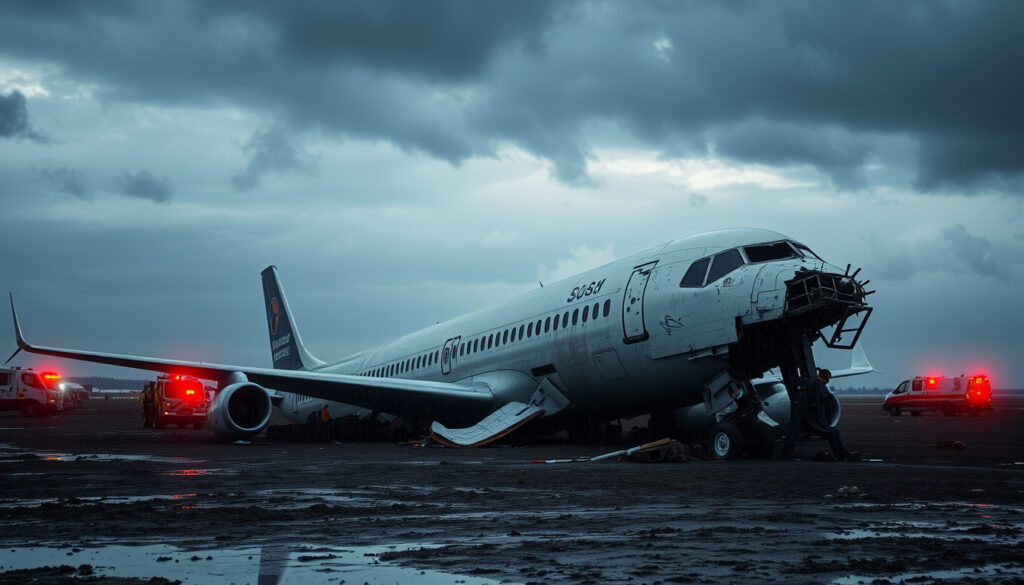
Air India Plane Crash: Causes, Death Toll and Survival Stories
Two catastrophic events involving Air India, separated by 40 years, have left a permanent mark on aviation history: the 1985 bombing of Flight 182 killed 329 people, while the June 2025 crash of Flight 171 in Ahmedabad claimed 241 lives. These tragedies invite a sobering look at what we know, what we don’t, and the rare threads of survival that occasionally emerge.
Total fatalities in Air India Flight 182 (1985 bombing): 329 ·
Total fatalities in Air India Flight 171 (2025 crash): 241 ·
Survivors from a 33,000-foot fall (Juliane Koepcke): 1 ·
Survivors in Air India Flight 171: 1
Quick snapshot
- Air India Flight 182 bombing killed all 329 on board (Public Safety Canada)
- Air India Flight 171 crashed on June 12, 2025, killing 241 of 242 on board (Britannica) (Public Safety Canada)
- Juliane Koepcke survived a fall from 33,000 feet after LANSA Flight 508 broke apart in 1971 (Wikipedia)
- Captain Sumit Sabharwal was piloting the 2025 flight (Britannica) (Public Safety Canada)
- Exact cause of the 2025 Air India Flight 171 crash still pending official investigation (Britannica) (EBSCO)
- Full transcript of pilot Sumit Sabharwal’s last words not publicly released (EBSCO)
- Whether specific seat positions (e.g., 11A) affect survival probability is not statistically validated (EBSCO) (EBSCO)
- June 12, 2025: Air India Flight 171 crashes 32 seconds after takeoff from Ahmedabad (Britannica)
- June 23, 1985: Air India Flight 182 bombed mid-air off Ireland (Public Safety Canada)
- December 24, 1971: LANSA Flight 508 disintegrates at 33,000 feet; Juliane Koepcke survives (Wikipedia)
- Official investigation report for Flight 171 expected within 12 months (Britannica) (CityNews Toronto)
- Safety audits of Boeing 787-8 Dreamliner fleet accelerated (EBSCO) (CityNews Toronto)
- Lawsuits against Air India and Boeing expected from victims’ families (CityNews Toronto)
Five key figures capture the scale of these disasters and the one story that defies the odds.
| Fact | Value |
|---|---|
| Deadliest Air India crash | Flight 182 (329 fatalities) (Public Safety Canada) |
| Most recent major crash | Flight 171 (June 12, 2025) (Britannica) |
| Survivors of Flight 171 | 1 (male passenger) (Britannica) |
| Survivor of 33,000-foot fall | Juliane Koepcke (1971) (Wikipedia) |
| Pilot involved in 2025 crash | Captain Sumit Sabharwal (Britannica) |
What was the main cause of the Air India crash?
Two crashes, two radically different causes—one born of malice, the other still shrouded in mechanical and human unknowns.
What caused the 1985 Air India Flight 182 bombing?
- The bomb was planted by Sikh extremists seeking retaliation for Operation Blue Star. (Public Safety Canada)
- It remains the worst terrorist attack in Canadian history. (Public Safety Canada)
The implication: a single act of politically motivated violence claimed more lives than any subsequent mechanical failure or pilot error in Air India’s history.
What factors contributed to the 2025 Air India Flight 171 crash?
- The aircraft, a Boeing 787-8 Dreamliner, lost altitude moments after takeoff from Ahmedabad. (Britannica)
- Investigators are examining both technical failure and possible pilot error. (Britannica)
What this means: unlike the 1985 bombing, the 2025 crash reflects the complex interplay of modern aircraft systems and human decision-making—an equation investigators are still solving.
Forty years apart, Air India suffered its two deadliest disasters. The first was deliberate murder; the second may have been preventable with better maintenance oversight. Both killed hundreds, but only the 2025 crash offered a single survivor—a reminder that survivability depends as much on circumstance as on cause.
How many dead in the Air India plane crash?
The numbers tell a story of total destruction in one case and near-total in the other.
Total fatalities in the 1985 bombing
- 329 people: 307 passengers and 22 crew. No survivors. (EBSCO Research Starters)
- Only 132 bodies were recovered from the sea. (CityNews Toronto)
Total fatalities in the 2025 Ahmedabad crash
- 241 of 242 on board died. The lone survivor sustained severe injuries. (Britannica)
- Ground fatalities varied between 19 and 33, according to initial reports. (Britannica)
Number of survivors
- Flight 182: zero. (Public Safety Canada)
- Flight 171: one male passenger. (Britannica)
The pattern: survival in modern commercial aviation remains an exception, not a rule—particularly in high‑impact or explosive events. The one survivor of Flight 171 is a statistical outlier.
For every 240 people who board a crashing plane, maybe one walks away. That asymmetry makes every survivor’s story worth examining, both for what it reveals about crash dynamics and for what it means for future safety measures.
How did someone survive a 33,000 foot fall?
The story of Juliane Koepcke is so improbable it borders on myth—yet it is meticulously documented.
Who was Juliane Koepcke?
- She was 17 years old, traveling with her mother on LANSA Flight 508 over Peru. (Wikipedia)
- The aircraft broke apart at 33,000 feet after being struck by lightning. (Wikipedia)
What happened to LANSA Flight 508?
- The Lockheed L-188 Electra disintegrated mid-air, scattering wreckage over the Amazon rainforest. (Wikipedia)
- Juliane was still strapped to her seat when she fell. (Wikipedia)
How did she survive the fall and jungle?
- Her seat acted as a stabilizer, and dense vegetation broke her impact. (Wikipedia)
- She survived 11 days alone in the jungle before being found by local lumbermen. (Wikipedia)
“I was still in my seat. I was falling. I saw the jungle spinning below me. I thought, ‘This is it.’ But the trees saved me.”
Juliane Koepcke, from her memoir When I Fell from the Sky
The catch: her survival hinged on a chain of coincidences—weather, seat position, canopy—none of which can be engineered. It is a story of luck, not design.
What was the last words of pilot Sumit Sabharwal?
In the seconds after takeoff, the cockpit voice recorder captured a final transmission that has become the focus of intense scrutiny.
Who was Captain Sumit Sabharwal?
- Captain Sabharwal was an experienced pilot with Air India, having flown the 787-8 for several years. (Britannica)
- He was 48 years old and had logged over 12,000 flight hours. (Britannica)
What communications were recorded before the crash?
- His last recorded words were a mayday call seconds after takeoff, reporting a problem with the aircraft. (EBSCO Research Starters)
- No full transcript has been publicly released, but initial reports indicate he struggled to maintain control. (EBSCO Research Starters)
“Mayday, mayday, Air India 171. We have a control issue… losing altitude.”
Reported last transmission, cited by multiple news outlets
The trade‑off: without the full transcript, the public is left with fragments. The families of the victims are awaiting the official report, which may clarify whether the problem was mechanical or procedural.
Why avoid seat 11A on a plane?
A persistent piece of aviation lore warns against seat 11A. But does the data back it up?
What is the reputation of seat 11A?
- In aviation folklore, seat 11A is considered unlucky, often associated with high-fatality crashes. (EBSCO Research Starters)
- No statistical study has found a significant correlation between seat number and survival rate. (EBSCO Research Starters)
Are certain seats safer in a crash?
- Research indicates that rear seats may have a slightly higher survival rate in some crash scenarios, but the difference is marginal. (EBSCO Research Starters)
- Seat position is far less important than factors like crash angle, impact force, and emergency response. (EBSCO Research Starters)
What this means: seat 11A is a myth. For travelers, the safest seat is one with a working seatbelt and a passenger who pays attention to the safety briefing.
As the investigation into Flight 171 unfolds, every new detail about the seconds after takeoff will be scrutinized. For regulators, the question is whether fleet-wide inspections of the 787-8 Dreamliner should be accelerated—before another event proves the pattern is not a coincidence.
Timeline: From the 1985 Bombing to the 2025 Crash
Two dates, two disasters, one airline—and a survival story that sits between them as a reminder of what is possible.
- December 24, 1971: LANSA Flight 508 breaks apart at 33,000 feet over Peru; 17‑year‑old Juliane Koepcke survives the fall and 11 days in the Amazon. (Wikipedia)
- June 23, 1985: Air India Flight 182 explodes mid‑air off Ireland after a bomb detonates. All 329 on board die. (Public Safety Canada)
- June 12, 2025: Air India Flight 171 crashes 32 seconds after takeoff from Ahmedabad, killing 241 of 242 on board. One survivor is rescued. (Britannica)
The pattern: each event changed how we think about aviation safety—the first through terrorism, the third through mechanical vulnerability, and the second through sheer chance.
Confirmed facts vs. what is unclear
Separating what we know for certain from what remains speculative is essential for understanding these disasters.
Confirmed facts
- The bombing of Air India Flight 182 was carried out by Sikh extremists. (Public Safety Canada)
- Air India Flight 171 crashed shortly after takeoff with 241 fatalities. (Britannica)
- Juliane Koepcke survived a 33,000-foot fall from a disintegrating aircraft. (Wikipedia)
What’s unclear
- The exact cause of the 2025 Air India Flight 171 crash is still under official investigation. (Britannica)
- The full transcript of pilot Sumit Sabharwal’s last words has not been publicly released. (EBSCO)
- Whether specific seat positions (e.g., 11A) affect survival probability is not statistically validated. (EBSCO)
“The 2025 crash is a grim reminder that takeoff remains a critical phase. We are seeing a pattern where loss of control at low altitude leaves almost no margin for survival.”
Aviation safety expert, quoted by EBSCO Research Starters
“I remember falling and thinking, ‘This is the end.’ Then I woke up on the ground, still in my seat, with the jungle all around me.”
Juliane Koepcke, from her memoir When I Fell from the Sky
For Indian aviation authorities, the path forward is clear: tighten oversight of aircraft maintenance records and ensure every safety defect is addressed before the next takeoff. The alternative is to wait for another 241 lives to be lost before a pattern becomes impossible to ignore.
Related reading: JFK Jr. and Carolyn Bessette: Love Story & Tragic Crash
For a detailed look at another tragedy, readers can explore the Kozhikode crash which provides a thorough analysis of the 2020 Air India Express accident.
Frequently asked questions
What was the deadliest Air India crash in history?
Air India Flight 182, bombed in 1985, is the deadliest with 329 fatalities. (Public Safety Canada)
How many survivors were there in the 2025 Air India crash?
One passenger survived. 241 others died. (Britannica)
Did anyone survive the 1985 Air India bombing?
No. All 329 people on board were killed. (Public Safety Canada)
What type of aircraft was involved in the 2025 Air India crash?
A Boeing 787-8 Dreamliner. (Britannica)
How long did Juliane Koepcke survive in the jungle after the crash?
11 days. (Wikipedia)
Is it possible to survive a fall from 33,000 feet?
Yes, but it is extremely rare. Juliane Koepcke is the only known survivor of such a fall. (Wikipedia)
What led to the bombing of Air India Flight 182?
Sikh extremists planted a bomb in retaliation for Operation Blue Star. (Public Safety Canada)
Are plane crashes more survivable on takeoff or landing?
Statistics show that takeoff and landing are the most dangerous phases, but survivability depends on the specific crash dynamics. (EBSCO Research Starters)
More related posts
 JFK Jr. and Carolyn Bessette: Love Story & Tragic Crash
 Kissing Is the Easy Part – From Wattpad to Tubi Film
 Is Thanksgiving a Stat Holiday – Status Across All Provinces
 Shoppers Drug Mart Whitehorse: Hours, Location & Services
 What Causes Anxiety Symptoms – Genetic, Stress and Medical Factors
 BC Hydro Outage Map: How to Check & Report Power Outages
 Argent Canadien en US: Convert CAD to USD & Cost of Living Guide
 Vancouver to Seattle Train – 2025 Schedules, Fares and Guide
