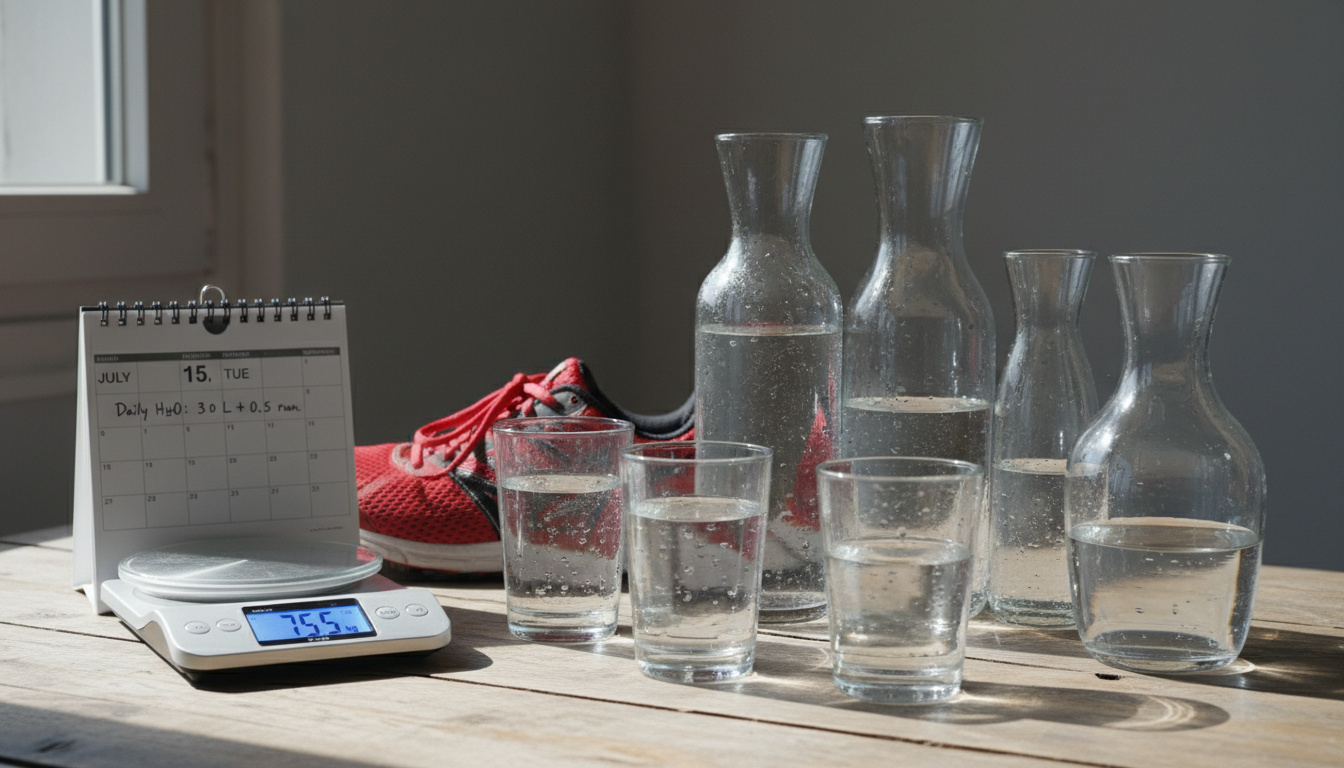

Daily water intake recommendations for healthy adults generally fall between 2.7 and 3.7 liters, though individual needs vary significantly based on body composition, activity levels, and environmental conditions. These figures from the Institute of Medicine and Mayo Clinic represent total fluid intake from all beverages and food, not just plain water.
The common advice to drink eight glasses daily oversimplifies human physiology. Modern guidelines emphasize personalized hydration strategies over rigid rules.
Understanding your specific requirements involves assessing multiple biological and lifestyle factors rather than following generic prescriptions.
How Much Water Should You Drink a Day?
2–3 liters baseline daily
3.7 liters (125 oz)
2.7 liters (91 oz)
Beverages plus food moisture
- The 8×8 rule lacks scientific validation and ignores individual variation
- Approximately 20% of daily hydration comes from water-rich foods
- Men typically require 1 liter more than women due to greater muscle mass
- Thirst sensation provides adequate guidance for most healthy adults
- Pale yellow urine indicates proper hydration status
- Average American consumption falls below recommended levels
| Group | Daily Amount | Source Authority |
|---|---|---|
| Adult Men | 3.7 L (13 cups) | IOM/NASEM |
| Adult Women | 2.7 L (9 cups) | IOM/NASEM |
| Pregnancy | 3.0 L (10 cups) | WebMD |
| Breastfeeding | 3.6 L (12 cups) | WebMD |
| Children 1–3 years | 1.0 L (4 cups) | WebMD |
| Children 4–8 years | 1.2 L (5 cups) | WebMD |
| Children 9–18 years | 1.4–1.9 L (6–8 cups) | WebMD |
| Exercise Addition | +355 mL per 30 min | UM System |
How Much Water Intake Do You Need Based on Weight, Activity, and Other Factors?
How Much Water Should You Drink Based on Body Weight?
Body weight serves as a practical starting point for estimating needs. The formula of 0.5 to 1 ounce per pound provides a personalized baseline. A 200-pound individual requires roughly 100 to 200 ounces daily, accounting for the higher water content in muscle tissue compared to fat.
An alternative calculation suggests consuming half your body weight in ounces. A 150-pound person would target 75 ounces before accounting for exercise or climate factors. Lean mass increases requirements due to muscular water content.
Multiply your weight in pounds by 0.5 to 0.75 to establish a baseline in ounces. Increase this figure based on activity duration and environmental heat exposure.
How Much Water Do You Need If You Exercise?
Physical activity generates substantial fluid losses through perspiration. Add 12 ounces for every 30 minutes of moderate exercise. High-intensity training or hot weather conditions demand further increases to offset sweat-related losses.
How Much Water Should Women Drink?
Women generally require 2.7 liters daily compared to 3.7 liters for men. Pregnancy increases needs by approximately one cup, bringing the total to 10 cups. Breastfeeding mothers require 12 cups daily to support milk production.
Does Water Intake Vary by Climate?
Environmental conditions significantly impact hydration requirements. Hot, humid, or high-altitude environments accelerate fluid loss through sweat and respiration. Even cold, dry air increases needs due to respiratory water loss.
Does Coffee, Tea, or Other Beverages Count Toward Your Daily Water Intake?
Caffeinated beverages contribute meaningfully to daily hydration goals. Coffee and tea provide hydration nearly equivalent to plain water despite their mild diuretic effects. Approximately 80% of total water intake typically comes from beverages, with caffeinated options counting toward this total.
Water-rich foods supply the remaining 20% of daily hydration. Fruits and vegetables contain high moisture content that contributes to overall fluid balance.
How Much Water Is Too Much and What Are the Risks?
Excessive water consumption poses rare but serious health risks. Rapid intake beyond kidney processing capacity dilutes blood sodium concentrations, potentially causing hyponatremia. This condition can trigger seizures or brain swelling, particularly affecting endurance athletes who force fluid consumption during events.
Consuming water faster than the kidneys can excrete it—roughly 1 liter per hour—dilutes electrolyte balance. Endurance athletes should avoid forced hydration beyond thirst signals.
What Are the Signs of Dehydration?
Dehydration manifests through thirst, dry mouth, fatigue, and dizziness. Dark urine, headaches, constipation, and overheating indicate insufficient fluid intake. Consistent consumption throughout the day prevents these symptoms better than reactive drinking.
Pale yellow urine color indicates adequate hydration. Darker shades suggest increasing fluid intake, while completely clear urine may indicate overconsumption.
How Have Daily Water Recommendations Evolved Over Time?
-
:
The “8×8” rule emerges from misinterpreted Food and Nutrition Board recommendations suggesting 2.5 liters daily, including food sources. -
:
The Institute of Medicine establishes evidence-based guidelines distinguishing between total fluids and plain water. -
:
CDC data reveals average American adults consume only 44 ounces of plain water daily, significantly below recommendations. -
:
Wearable technology and smartphone applications enable personalized hydration tracking based on biometric data and environmental conditions.
What Is Established Versus Uncertain About Hydration Needs?
| Established Facts | Uncertain or Individualized Factors |
|---|---|
| Men require 3.7L, women 2.7L as general guidelines | Optimal intake for specific chronic conditions |
| Thirst mechanisms adequately guide most healthy adults | Long-term effects of mild chronic dehydration |
| Exercise increases requirements measurably | Precise genetic variations in hydration efficiency |
| Overhydration can cause hyponatremia | Exact thresholds for kidney overload in individuals |
Why Does Individual Hydration Matter?
Water facilitates cellular function, temperature regulation, and nutrient transport throughout the body. Proper hydration supports cardiovascular health, joint lubrication, and cognitive performance. Individual requirements fluctuate based on metabolic rate, dietary composition, and medication use.
The Capital Gain Tax Canada – 2024 Rates, Rules and Exemptions framework illustrates how standardized guidelines require individual adjustment—similarly, water recommendations serve as baselines requiring personal calibration.
What Do Leading Health Authorities Recommend?
About 15.5 cups (3.7 liters) of fluids a day for men and about 11.5 cups (2.7 liters) of fluids a day for women.
Mayo Clinic
The average American adult consumes only 44 ounces of plain water daily, falling short of established guidelines.
CDC via WebMD
How Can You Determine Your Ideal Daily Water Intake?
Calculate your baseline using body weight—half your weight in ounces—then adjust for exercise duration, climate conditions, and
Related stories





Jessica Morin covers provincial policy and regional economic trends.