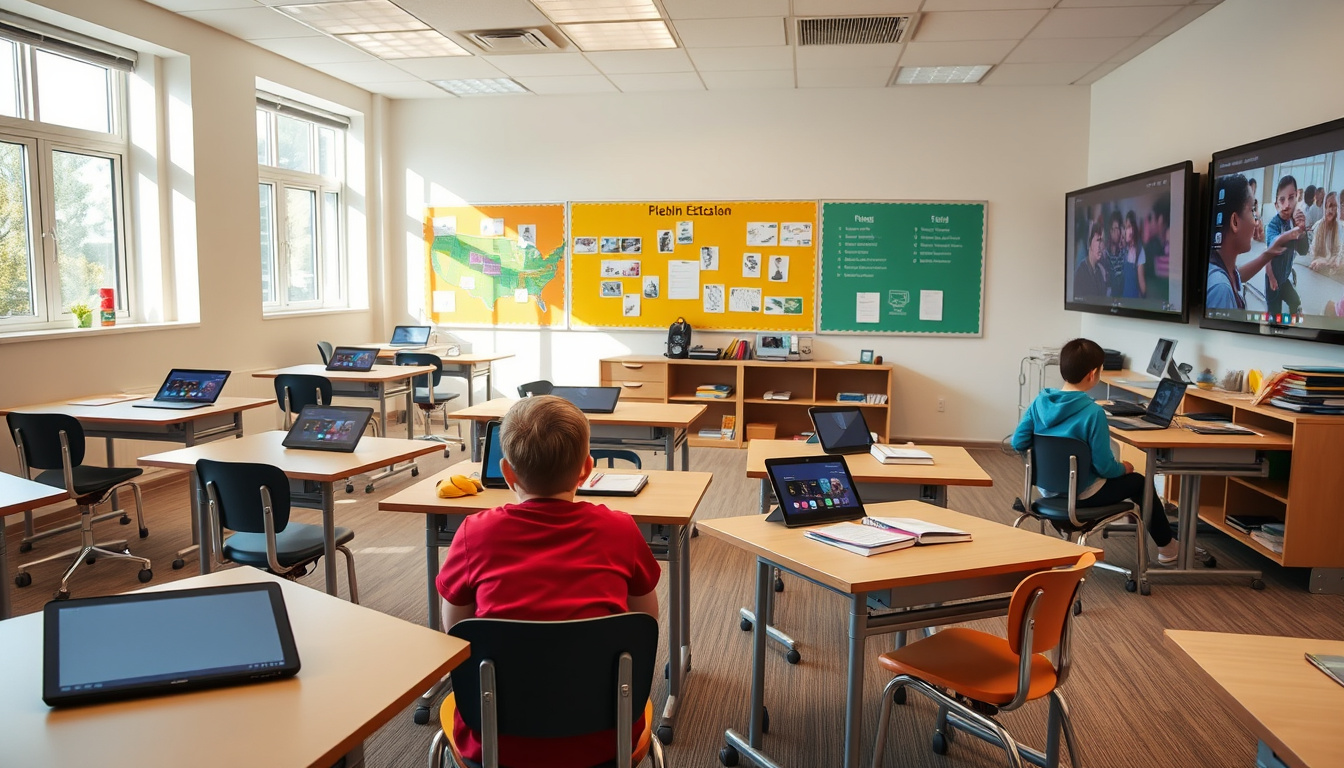

Universal Design for Learning (UDL): A Framework for Inclusive Education
Universal Design for Learning represents a transformative approach to education that seeks to remove barriers and create learning environments where every student can succeed. Developed by the Center for Applied Special Technology, this research-based framework provides educators with structured guidelines to optimize teaching through multiple pathways.
The framework addresses a fundamental challenge in education: traditional one-size-fits-all instruction often fails to meet the diverse needs of learners. UDL responds by emphasizing flexibility in how students engage with content, how content is represented, and how learners demonstrate their knowledge. This approach moves beyond accommodation to design learning experiences that work for everyone from the start.
Since its inception, UDL has evolved through several iterations, with the most recent update—UDL Guidelines 3.0—released in July 2024. This latest version introduces significant enhancements that acknowledge learners’ intersecting identities and address systemic barriers to equitable education.
What Is Universal Design for Learning?
Universal Design for Learning is a framework designed to optimize teaching and learning for all students by providing multiple means of engagement, representation, and action and expression. The UDL Guidelines serve as concrete, actionable tools that can be applied across any discipline or domain to ensure learners can access and participate in meaningful, challenging learning opportunities.
The framework is grounded in scientific research about how humans learn and is supported by evidence benefiting learners across all ages and contexts. Rather than retrofitting accommodations for struggling students, UDL encourages educators to build flexibility into learning experiences from the beginning, anticipating variability among all learners.
UDL at a Glance
| Principle | Core Goal | Checkpoint Examples | Addresses Learner Variability Through |
|---|---|---|---|
| Engagement | Activate motivation and interest | Offer choices, vary demands, optimize challenge | Affective networks; identity and belonging |
| Representation | Present information in diverse ways | Offer alternatives for auditory, visual information; clarify syntax; guide comprehension | Recognition networks; perception and understanding |
| Action and Expression | Enable multiple demonstration paths | Provide options for physical action, tools, navigation; support planning; enhance executive function | Strategic networks; planning and execution |
| V3.0 Addition: Identity | Affirm learner wholeness | Embed diverse perspectives, challenge bias, foster belonging | Intersecting identities woven across all principles |
Key Insights
- UDL shifts the focus from reactive accommodation to proactive, inclusive design that benefits all learners
- The framework is grounded in neuroscience, specifically the three brain networks that govern how humans process learning
- UDL applies across all age levels, from early childhood through higher education and professional development
- The approach emphasizes learner agency—helping students become purposeful, strategic, and motivated participants in their own education
- Version 3.0 explicitly addresses systemic barriers and incorporates identity-centered perspectives as essential dimensions of variability
- Flexibility in assessment allows students to demonstrate knowledge through multiple means, reducing barriers for learners with diverse needs
- The framework is maintained and updated by CAST, which describes UDL as a living, dynamic tool continuously evolved based on practitioner feedback
Snapshot Facts
| Fact | Detail | Source |
|---|---|---|
| Originator | Center for Applied Special Technology (CAST) | CAST official materials |
| Framework Principles | 3 core principles | UDL Guidelines documentation |
| Total Guidelines | 9 guidelines (3 per principle) | Texas Education Agency resources |
| Latest Version | Guidelines 3.0, released July 30, 2024 | AVID Open Access reporting |
| Development Research | Over 1,100 titles reviewed, 40+ focus groups | AVID Open Access reporting |
| Implementation Levels | 3 rows: Access, Build, Internalize | Texas Education Agency resources |
| Ultimate Goal | Develop expert learners who are resourceful, strategic, and purposeful | UDL Guidelines official site |
What Are the Core UDL Principles and Guidelines?
The UDL framework is organized around three fundamental principles, each addressing a different dimension of the learning process. These principles correspond to the three primary brain networks that influence how individuals acquire and process knowledge.
The Three Guiding Principles
Engagement addresses the “why” of learning by emphasizing the recruitment of interest, motivation, and active learner involvement. This principle recognizes that motivation is not simply a prerequisite for learning but an ongoing process that must be nurtured throughout educational experiences.
Representation tackles the “what” of learning, focusing on offering diverse options for perception and understanding. This principle ensures that content is accessible to learners regardless of their preferred sensory channels or prior knowledge structures.
Action and Expression handles the “how” of learning, addressing the ways learners demonstrate their knowledge and take purposeful action. This principle acknowledges that there are many valid paths to showing understanding.
Brain Networks Foundation
These three principles map directly onto key brain networks identified through neuroscience research:
- Affective Network: Governs motivation and learner engagement—corresponding to the Engagement principle
- Recognition Network: Affects perception and understanding of new learning—corresponding to the Representation principle
- Strategic Network: Addresses learners’ abilities to plan, organize, and take action—corresponding to the Action and Expression principle
The Horizontal Framework Structure
Beyond the vertical organization into three principles, the UDL Guidelines are structured horizontally across three implementation levels:
- Access: Suggestions for increasing access to learning goals by recruiting interest and offering options for perception and physical action
- Build: Suggestions for developing effort, persistence, language, symbols, expression, and communication skills
- Internalize: Suggestions for empowering learners through self-regulation, comprehension, and executive function
Each of the three principles contains three guidelines, creating nine distinct guidelines total. Every guideline includes specific checkpoints that provide detailed, actionable suggestions for educators. This dual organization allows practitioners to approach UDL from multiple angles—whether starting with engagement concerns or focusing on representation challenges.
UDL Guidelines 3.0: Key Updates
CAST released UDL Guidelines 3.0 on July 30, 2024, marking the fifth iteration of the guidelines. This update resulted from an extensive development effort launched in 2020 that included over 40 focus groups, research of over 1,100 unique titles, and comprehensive literature reviews.
Asset-Based and Identity-Centered Approach: The updated guidelines emphasize learners’ multiple and intersecting identities as a critical aspect of variability. This adds the “who” of learning as a dimension woven across all three UDL principles, complementing the previous focus on why, what, and how learners engage with content.
Addressing Systemic Barriers: Version 3.0 acknowledges that individual, institutional, and systemic biases can serve as significant barriers to equitable learning. The updated guidelines specifically respond to calls from practitioners and researchers to address barriers rooted in biases and systems of exclusion for learners with and without disabilities.
Interdependence and Collective Learning: The new version emphasizes the value of collective learning and interdependence, encouraging collaborative environments where shared knowledge-building is central.
Learner-Centered Language: Guidelines 3.0 intentionally uses verbs that can be applied interchangeably between educators and learners, shifting from educator-centered to learner-centered language. This allows educators, learners, or both to apply specific guidelines depending on learning goals.
How Do You Implement UDL in the Classroom?
Implementing Universal Design for Learning requires thoughtful integration of its principles throughout lesson planning and instructional delivery. The framework encourages educators to offer choices, multiple pathways to new learning, and procedural supports that empower learners with multiple ways to access, interact with, and express new learning.
Practical Strategies for Engagement
To apply the Engagement principle in classroom settings, educators can optimize relevance and authenticity by connecting content to students’ real-world experiences and interests. Varying options for sustaining effort and providing options for self-regulation helps students develop ownership over their learning journey. Creating opportunities for collaboration and peer interaction supports the collective learning emphasized in version 3.0.
Practical Strategies for Representation
When implementing Representation strategies, teachers can offer multiple media formats—text, audio, video, and interactive elements—to address diverse learning preferences. Clarifying vocabulary and syntax while providing background information helps scaffold comprehension. Actively highlighting patterns and critical features in content supports recognition networks.
Practical Strategies for Action and Expression
For Action and Expression, educators should provide options for physical action through assistive technologies and alternative input methods. Using multiple tools for composition and problem-solving accommodates different strengths. Supporting planning and strategy development helps students become more effective learners.
Begin by auditing one existing lesson for barriers—ask whether all students can access the content, engage meaningfully, and demonstrate understanding. Identify one change per principle that could reduce those barriers, then gradually expand implementation across lessons and units. The UDL Guidelines website provides downloadable checklists and planning tools to support this process.
Supporting Diverse Learners
UDL benefits students across the full spectrum of learner variability, including those with disabilities, those who are English language learners, students with attention challenges, and advanced learners who need additional challenge. Rather than waiting to identify specific learning needs, UDL builds flexibility into instruction from the outset, reducing the need for reactive accommodations.
What Are the Benefits of UDL and How Does It Compare to Other Approaches?
Universal Design for Learning offers several distinct advantages over traditional instructional approaches. The framework’s proactive nature means barriers are anticipated and addressed before they impede learning, rather than responded to after students struggle.
Core Benefits of UDL
- Inclusive by Design: All learners benefit from flexible learning environments, not only those with identified disabilities or needs
- Evidence-Based: Grounded in neuroscience and continuous research development
- Flexible Application: Adaptable across subjects, grade levels, and educational contexts
- Learner Agency: Supports development of self-directed, purposeful learners who understand their own learning needs
- Reduces Barrier Access: Anticipates variability rather than retrofitting accommodations
- Addresses Systemic Issues: Version 3.0 explicitly tackles institutional and systemic biases
UDL and Differentiated Instruction
While UDL and differentiated instruction share the goal of meeting diverse learner needs, they differ in fundamental approach. Differentiated instruction typically involves adjusting content, process, or product based on assessed student needs—often working from a deficit model that identifies what students cannot yet do.
UDL, by contrast, focuses on building flexibility into instruction from the beginning, designing learning experiences that offer multiple pathways for all students. Rather than waiting to identify struggling learners, UDL creates learning environments where variability is expected and accommodated from the outset.
A persistent misconception suggests UDL is only for students with disabilities. In reality, the framework is designed to optimize learning for all students—those with disabilities, English language learners, students from diverse cultural backgrounds, advanced learners, and every other learner in between. You can find more information about Universal Design for Learning at Three Thousand Years of Longing.
Is UDL Only for Special Education?
No. UDL is explicitly designed as a framework for general education. While it certainly benefits students with disabilities—and aligns with requirements under IDEA—the framework’s fundamental purpose is to improve learning outcomes for everyone. The research grounding UDL in neuroscience applies to all learners, making it a universal approach rather than a specialized intervention.
The Evolution of UDL Guidelines
Understanding the development timeline of Universal Design for Learning provides context for its current form and ongoing evolution. The framework has undergone continuous refinement since its initial development.
- 1984: CAST (Center for Applied Special Technology) is founded, establishing the organization that would develop and maintain UDL
- 1990s: Early conceptual work connecting universal design principles from architecture to educational contexts
- 2008: First official UDL Guidelines published, establishing the three-principle framework
- 2011: Guidelines 2.0 released with expanded checkpoint documentation
- 2018: Guidelines 2.2 refined based on practitioner feedback
- 2020: Comprehensive revision process launched for Guidelines 3.0, including extensive research and focus groups
- July 30, 2024: UDL Guidelines 3.0 officially released, marking the fifth major iteration
CAST describes UDL as a living, dynamic tool that continuously evolves based on new research and feedback from practitioners worldwide. The July 2024 release reflects years of collaborative development involving over 40 focus groups and review of more than 1,100 research titles.
What Is Established vs. What Remains Unclear About UDL
| Established Information | Information That Remains Unclear or Requires Further Research |
|---|---|
| CAST developed UDL and maintains the official guidelines | Long-term outcome studies tracking UDL implementation across school systems |
| Three core principles correspond to brain networks | Specific implementation metrics and measurable standards for UDL fidelity |
| Guidelines 3.0 released July 30, 2024, with identity-centered approach | Best practices for scaling UDL in under-resourced school environments |
| Framework applies across K-12, higher education, and professional settings | Optimal professional development models for UDL adoption |
| Version 3.0 development included 40+ focus groups and 1,100+ research titles | Precise comparative effectiveness data against other instructional frameworks |
| UDL differs from differentiated instruction in its proactive approach | Clear guidance on UDL integration with MTSS (Multi-Tiered System of Supports) and RTI (Response to Intervention) |
Where Did UDL Originate?
Universal Design for Learning emerged from the Center for Applied Special Technology, commonly known as CAST. Founded in 1984, CAST pioneered the application of technology to support learning for students with disabilities before expanding this work into a comprehensive educational framework.
The framework draws conceptual inspiration from universal design in architecture and product development—a field pioneered by architect Ron Mace that emphasizes creating environments and products accessible to all people rather than requiring adaptations for those with disabilities.
The connection to neuroscience research provides UDL with its theoretical foundation. By understanding how the brain networks for affect, recognition, and strategy influence learning, the framework offers scientifically grounded guidance for instructional design. This research base distinguishes UDL from purely philosophical approaches to inclusive education.
Policy connections exist between UDL and major education legislation, including the Individuals with Disabilities Education Act. While UDL itself is not mandated by law, its principles align with legal requirements to provide access to general education curriculum and avoid discriminatory exclusion.
What Expert Sources Say About UDL
The UDL Guidelines are concrete, actionable tools that can be applied across any discipline or domain to ensure learners can access and participate in meaningful, challenging learning opportunities.
— CAST Official Guidelines Documentation
Version 3.0 acknowledges that individual, institutional, and systemic biases can serve as significant barriers to equitable learning. The updated guidelines specifically respond to calls from practitioners and researchers to address barriers rooted in biases and systems of exclusion for learners with and without disabilities.
— University of Colorado Denver TIPS Blog
The overarching objective of UDL is to develop “expert learners” who are resourceful and knowledgeable, strategic and goal-directed, and purposeful and motivated.
— Texas Education Agency
Summary: Key Takeaways
Universal Design for Learning provides a research-based framework for creating flexible, inclusive learning environments that accommodate the full range of learner variability. Organized around three core principles—Engagement, Representation, and Action and Expression—the framework guides educators in designing instruction that offers multiple pathways to learning from the outset.
The recent release of Guidelines 3.0 marks significant evolution in the framework, introducing identity-centered perspectives and explicit attention to systemic barriers while maintaining its foundation in neuroscience. For educators seeking to move beyond reactive accommodation toward proactive, inclusive design, the UDL framework offers structured guidance backed by ongoing research and practitioner input.
Those interested in exploring UDL further can access the complete guidelines, implementation checklists, and planning tools through the official UDL Guidelines website.
Frequently Asked Questions
What research supports Universal Design for Learning?
UDL is grounded in neuroscience research about how the brain processes learning. The framework was developed by CAST and is supported by evidence benefiting learners across all ages and contexts. Version 3.0 resulted from research of over 1,100 unique titles and extensive literature reviews.
What does UDL stand for?
UDL stands for Universal Design for Learning. It is not to be confused with Universal Design in architecture or product development, though it draws conceptual inspiration from that field.
Is UDL only for special education?
No. UDL is explicitly designed for general education and benefits all learners—those with disabilities, English language learners, students with attention challenges, advanced learners, and others. The framework proactively builds flexibility into instruction rather than retrofitting accommodations.
How is UDL different from differentiated instruction?
UDL differs from differentiated instruction in its approach. While differentiated instruction adjusts content based on assessed student needs, UDL builds flexibility into instruction from the beginning, anticipating variability rather than reacting to it.
What are the three principles of UDL?
The three principles of UDL are Engagement (the “why” of learning), Representation (the “what” of learning), and Action and Expression (the “how” of learning). Version 3.0 adds the “who” of learning as a dimension woven across all three principles.
Who developed Universal Design for Learning?
Universal Design for Learning was developed by CAST (Center for Applied Special Technology), founded in 1984. CAST continues to maintain and update the UDL Guidelines, most recently releasing version 3.0 in July 2024.
What is UDL version 3.0?
Version 3.0 is the fifth iteration of the UDL Guidelines, released on July 30, 2024. Key updates include an asset-based and identity-centered approach, explicit attention to systemic barriers, emphasis on collective learning, and shift to learner-centered language.
How does UDL relate to universal design in architecture?
UDL draws conceptual inspiration from universal design in architecture, pioneered by Ron Mace. Both approaches emphasize creating accessible environments for all people rather than requiring individual adaptations. UDL applies these principles to educational contexts.
Related stories





Hannah Walsh covers municipal government, councils, transit and local services across Canada.