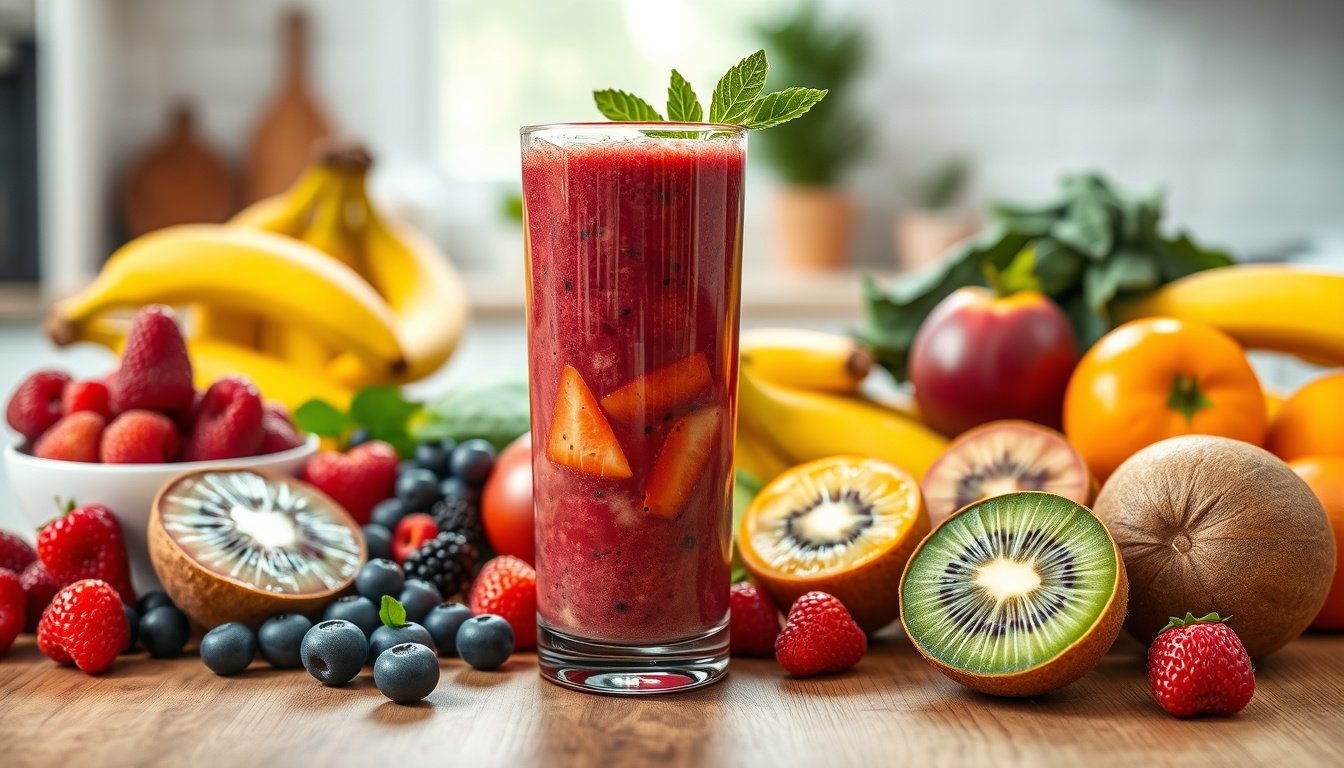
Anyone who has stood in the produce aisle wondering whether banana or berries will make a better smoothie already knows there’s no single answer. The best fruit for smoothies depends on what you’re aiming for—weight loss, stable blood sugar, or lower cholesterol. This guide matches fruit choices to those specific health goals, backed by nutrition experts and the latest research.
Calories in a typical smoothie: 200–500 kcal · Fiber in 1 cup of mixed berries: ~4 g · Sugar in 1 medium banana: 14 g (natural) · Recommended fruit intake per day: 2 cups (USDA)
Quick snapshot
- Berries, citrus, and apples are rich in soluble fiber which can help lower LDL cholesterol (Healthline (medical review)).
- Low-glycemic fruits (berries, green apple) cause slower blood sugar rise (Medical News Today (health journalism)).
- Using unsweetened bases and avoiding added sugars aligns with weight management goals (South Denver Cardiology Associates (cardiology practice)).
- Whether daily smoothie consumption leads to net health benefit depends on total calorie and sugar intake (Medical News Today).
- Optimal fruit combinations for pancreatitis require individual tolerance testing. (Medical News Today)
- Healthline updated its diabetes-friendly smoothie guide on January 30, 2025 (Healthline).
- Expect more personalized smoothie recommendations as research on glycemic response and gut microbiome deepens.
The table below ranks the top fruit picks by category, based on sugar load and nutrient density.
| Category | Top pick | Key characteristics |
|---|---|---|
| Top Berry | Blueberry | Lowest sugar per cup among common berries (Healthline) |
| Top Tropical | Mango | High in vitamin C, moderate sugar |
| Top Citrus | Orange | Adds liquid and vitamin C, caution with excess |
| Top Stone Fruit | Cherry | Antioxidant, lower glycemic index |
The implication: blueberries win the sugar-per-cup contest, but each category brings a distinct nutritional trade-off for your health goal.
What is the healthiest liquid to put in a smoothie?
Your choice of liquid sets the calorie and sugar baseline for the entire smoothie. Three options dominate, each with a trade-off.
- Water: 0 calories, 0 sugar, dilutes flavor.
- Unsweetened almond milk: ~30–40 calories per cup, minimal sugar, neutral taste (South Denver Cardiology Associates).
- Dairy milk (2%): ~120 calories per cup, 12 g natural sugar, adds protein and calcium.
- Coconut water: ~45 calories per cup, 6 g sugar, provides electrolytes.
The pattern: low-calorie liquids let the fruit’s natural sweetness lead, while higher-calorie options add protein or electrolytes but demand portion control.
Water vs. milk vs. plant-based milks
The Mayo Clinic Health System (integrated health care) recommends water or unsweetened milk as the healthiest base. For weight loss, water or unsweetened almond milk keeps calories near zero. For post-workout recovery, dairy milk adds protein. Coconut water works but watch the sugar—6 grams per cup can add up if you use a full cup.
How to avoid added sugars in smoothie liquids
Flavored milk, sweetened yogurt drinks, and fruit juices are the biggest sugar traps. A single cup of orange juice adds 21 g of sugar without the fiber of whole fruit. Stick to unsweetened bases and rely on fruit sweetness alone.
Water and unsweetened almond milk let the fruit shine without packing hidden calories. If you want protein, plain dairy milk wins—but expect 120 calories per cup.
The implication: choose your liquid based on your target. Weight loss? Water or unsweetened almond milk. Muscle gain? Dairy milk. Electrolytes? Coconut water—but measure the serving.
What not to mix in a smoothie?
A few well-intentioned additions can sabotage a smoothie’s health profile. Here are the ingredients to limit or skip.
- Added syrups, honey, and flavored yogurts (Medical News Today).
- High-sugar fruits like mango and pineapple in large amounts (more than ½ cup).
- Ice cream or full-fat dairy if aiming for low calorie.
- Pre-made smoothie mixes with added sugar—often 30+ g per serving.
The pattern: sugar bombs and calorie-dense dairy are the quickest ways to turn a healthy smoothie into a dessert.
Ingredients to avoid for weight loss
Nut butters and seeds are nutritious but calorie-dense. A single tablespoon of peanut butter adds ~95 calories. If your goal is weight loss, measure them strictly. Honest Health Nutrition’s cholesterol-lowering smoothie example uses 1 tablespoon of flaxseed (Honest Health Nutrition (nutrition blog)).
Hidden calorie and sugar traps
“Fruit-only smoothies” are a common trap. Without protein or fat, the carbohydrate load can spike blood sugar (Medical News Today). The American Diabetes Association (ADA) Diabetes Food Hub recommends pairing fruit with yogurt or protein powder.
A single store-bought smoothie can contain 500+ calories and 60+ grams of sugar. Homemade is the only way to control what goes in.
The trade-off: you get a more satisfying drink with protein and fat, but you add calories. Measure your add-ins to keep the total in check.
Can smoothies lower cholesterol?
Yes—when you choose the right fruits and supporting ingredients. The key is soluble fiber, which binds cholesterol in the digestive tract.
- Berries, apples, and citrus fruits are high in soluble fiber (Healthline).
- Adding oats, flaxseed, and avocado further boosts LDL-lowering power.
- Replace high-sugar bases with unsweetened options to avoid negating the benefits.
The pattern: soluble fiber plus healthy fats creates the most effective cholesterol-lowering smoothie formula.
Fruits and ingredients that may reduce LDL cholesterol
Honest Health Nutrition’s cholesterol-focused smoothie contains 11 grams of fiber and only 2.67 grams of saturated fat (Honest Health Nutrition). Ingredients include strawberries, banana, spinach, flax seed, and soy milk. Another version delivers 7.4 grams of fiber with tofu and hemp seeds.
The role of fiber and plant sterols
Soluble fiber dissolves into a gel-like substance that binds cholesterol. The South Denver Cardiology Associates guideline suggests one serving of fruit plus one to two tablespoons of healthy fat per smoothie.
A smoothie with 7–11 grams of fiber and low saturated fat can replace a high-sugar breakfast without sacrificing taste. For LDL lowering, focus on berries, apples, and add a teaspoon of flaxseed.
The implication: combine soluble fiber from fruit with healthy fats and low saturated fat. Avoid creamy bases that add cholesterol-raising saturated fat.
Are smoothies ok for type 2 diabetics?
Absolutely—if built correctly. The right smoothie can be a balanced meal that stabilizes blood sugar rather than spiking it.
- Prioritize berries, cherries, and green apples (low glycemic index).
- Add protein (Greek yogurt, protein powder) and healthy fats to slow sugar absorption (Medical News Today (health journalism)).
- Avoid fruit juices and high-sugar fruits like banana in large quantities (Healthline).
The pattern: protein and fat are not optional for diabetics—they are essential buffers against glucose spikes.
How to build a blood-sugar-friendly smoothie
The South Denver Cardiology Associates formula: one serving of protein, one serving of fruit, one to two tablespoons of good fat, and one to two servings of vegetables. A fruit serving is ¾ to 1 cup berries, a small banana, or ½ cup mango/pineapple.
Best low-glycemic fruits for diabetics
Blueberries and oranges provide health benefits without significant blood sugar spikes (Healthline). Spinach and cucumber add bulk with minimal carbs. The ADA Diabetes Food Hub recommends using frozen fruit to keep costs low and preparation easy.
Fruit-only smoothies are risky for diabetics because the fast-absorbing carbohydrates can raise blood sugar. Always pair fruit with protein and fat to slow digestion.
What this means: a diabetic-friendly smoothie is not a fruit juice swap—it’s a balanced meal. Skip the extra banana and load up on greens and Greek yogurt.
What to put in smoothies for weight loss?
Volume, protein, and fiber are the three pillars of a weight-loss smoothie. The goal is to feel full without consuming excess calories.
- Use leafy greens (spinach, kale) and berries to add volume with few calories (Simple Green Smoothies (recipe blog)).
- Include a source of protein (unsweetened protein powder, Greek yogurt) to control appetite.
- Limit high-calorie add-ins like nut butters and seeds to small portions.
The pattern: volume from low-calorie greens, satiety from protein, and sweetness from measured fruit creates a weight-loss ally that doesn’t leave you hungry.
Low-calorie, high-volume fruit choices
Frozen cauliflower has become a popular smoothie add-in for weight loss: it adds creaminess and fiber for only ~25 calories per cup. Mixed berries provide sweetness with fewer calories than tropical fruits. Half a banana adds natural sweetness without tipping the sugar scale.
Ingredients that boost satiety
Protein is the most satiating macronutrient. A smoothie with 20 grams of protein from Greek yogurt or a clean protein powder can keep you full for 3–4 hours. Fitterfly (diabetes management platform) suggests unsweetened Greek yogurt or a handful of soaked almonds to ward off hunger pangs.
Adding protein and fat increases calories—but it also increases satiety. A 300-calorie smoothie with protein beats a 150-calorie fruit-only smoothie that leaves you hungry by mid-morning.
The implication: larger volume from greens and water, protein from yogurt or powder, and a small amount of healthy fat (½ tablespoon nut butter) gives you a weight-loss ally that tastes indulgent.
Fruit comparison by health goal
The table below maps specific fruits to four common health goals, showing how fiber-to-sugar ratios shift priorities.
| Health goal | Best fruits | Key nutrients | Notes |
|---|---|---|---|
| Weight loss | Mixed berries, frozen cauliflower (vegetable) | Low calorie, high volume | Measure half banana for sweetness (Simple Green Smoothies) |
| Diabetes management | Berries, green apple, cherries | Low glycemic index, high fiber | Pair with protein and fat (Healthline) |
| Lowering cholesterol | Blueberries, strawberries, apple, avocado | Soluble fiber, plant sterols | Add flaxseed or oats (Honest Health Nutrition) |
| Everyday nutrition | Banana, mango, spinach | Potassium, vitamin C, iron | Use unsweetened base |
Step-by-step: building a smoothie for weight loss
- Start with a liquid base – 1 cup unsweetened almond milk or water (0–30 calories).
- Add 1–2 cups of low-calorie greens – spinach or kale (~10 calories).
- Add ½–1 cup of berries – ~40–80 calories, 2–4 g fiber.
- Add a protein source – 1 scoop unsweetened protein powder (100–120 calories) or ½ cup plain Greek yogurt (70 calories).
- Add a healthy fat (optional) – ½ tablespoon almond butter (~50 calories) or 1 tablespoon chia seeds.
- Ice to desired consistency – zero calories.
Total: ~200–300 calories, 20+ g protein, 8+ g fiber. Adjust portions to your daily needs.
Confirmed facts vs. what’s unclear
Confirmed facts
- Berries, citrus, and apples are rich in soluble fiber which can help lower LDL cholesterol (Healthline).
- Low-glycemic fruits (berries, green apple) cause slower blood sugar rise (Medical News Today).
- Using unsweetened bases and avoiding added sugars aligns with weight management goals (South Denver Cardiology Associates).
What’s unclear
- Whether daily smoothie consumption leads to net health benefit depends on total calorie and sugar intake (Medical News Today).
- Optimal fruit combinations for pancreatitis require individual tolerance testing.
“Use water or unsweetened almond milk as the base of your smoothie to keep calories low,” recommends South Denver Cardiology Associates (cardiology practice).
“Berries, bananas, and avocados are excellent choices for a nutritious smoothie,” notes Medical News Today (health journalism).
“Fruit-only smoothies can be a bad choice for people with diabetes,” warns Medical News Today.
Choosing the best fruit for smoothies isn’t about a single superfruit—it’s about matching your selection to your health goal. For someone managing type 2 diabetes, the best fruit is the one that comes with a dollop of Greek yogurt and a handful of spinach. For those trying to lose weight, it’s the fruit that delivers the most volume for the fewest calories. The implication is clear: stop searching for a magic berry and start building a balanced smoothie formula. Test your combinations, measure your portions, and adjust based on how your body responds.
Related reading: Bacon Wrapped Water Chestnuts – Easy Air Fryer Recipe · How Much Water Should You Drink
For those focused on shedding pounds, exploring weight loss smoothie recipes can provide tailored options that align with your calorie and protein targets.
Frequently asked questions
What is the rule 3 for smoothies?
A common rule-of-thumb is the “3-2-1” formula: 3 parts vegetables, 2 parts fruit, 1 part protein. Another variation from South Denver Cardiology Associates suggests one serving of protein, one serving of fruit, one to two tablespoons of good fat, and one to two servings of vegetables.
What is a good smoothie for pancreatitis?
There is no one-size-fits-all answer because individual tolerance varies. Generally, low-fat, liquid-based smoothies with easily digestible fruits (like ripe banana or apple) and a vegetable base (cucumber) are recommended. Avoid high-fat add-ins like nut butters and seeds. Consult your healthcare provider before adding new foods.
What is the miracle fruit for type 2 diabetes?
No single fruit is a miracle, but berries—especially blueberries and strawberries—consistently show benefits for blood sugar control due to their low glycemic index and high antioxidant content (Healthline).
Is it okay to drink a fruit smoothie every day?
Yes, if the smoothie is balanced with protein, fiber, and healthy fats, and fits within your daily calorie and sugar goals. Medical News Today cautions that fruit-only smoothies can lead to high sugar intake and blood sugar spikes, especially if purchased from stores.
What smoothies will not spike blood sugar?
Smoothies that combine low-glycemic fruits (berries, green apple) with protein (Greek yogurt, protein powder) and healthy fat (avocado, chia seeds) will minimize blood sugar spikes. Avoid fruit juices and high-sugar fruits like banana in large amounts (Healthline).
What is the number one fruit that kills bad cholesterol?
Oats are often cited for their beta-glucan fiber, but among fruits, blueberries and strawberries stand out for their soluble fiber content combined with antioxidant effects that support LDL reduction (Healthline; Honest Health Nutrition).
Related stories





Marc Tremblay is Managing Editor at Northern Focus, running the daily news list, commissioning and headline review.