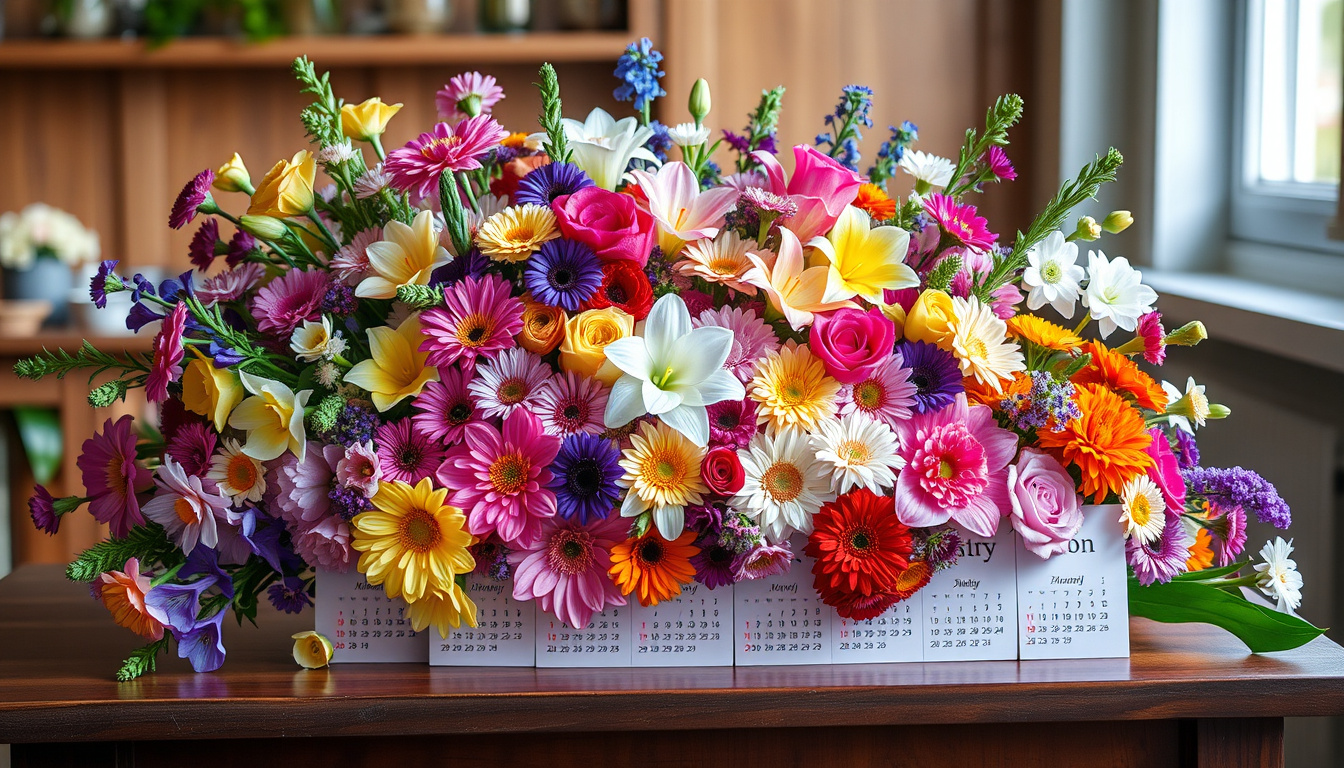
Each month carries a birth flower tradition that stretches back to ancient Roman times, when people believed certain blooms brought luck and protection during their natural blooming season. This guide cross-verifies primary and secondary flowers for all 12 months across established sources including Gardenia.net, Mahoney’s Garden, and Simple & Dainty.
Birth Months Covered: 12 ·
Average Flowers per Month: 2 ·
January Flowers: Carnation & Snowdrop ·
February Flowers: Violet & Primrose ·
March Flowers: Daffodil & Jonquil
Quick snapshot
- January primary is Carnation (Gardenia.net)
- May primary is Lily of the Valley (Gardenia.net)
- June primary is Rose (Gardenia.net)
- November primary is Chrysanthemum (Gardenia.net)
- Tradition dates to ancient Roman times (Gardenia.net)
- No single universal “official” list exists (Bloom Bar Flowers)
- Variations arise from regional and cultural traditions (Bloom Bar Flowers)
- Some sources differ on secondary flowers per month (Bloom Bar Flowers)
- Ancient Roman times: birth flower tradition originates (Gardenia.net)
- 15th century: Chrysanthemum records in Asia (Simple & Dainty)
- 19th century: Victorian floriography expands symbolism (Simple & Dainty)
- Continue to individual month breakdowns below
- Find your personal birth flower by month
- Explore what each bloom symbolizes
| Month | Primary Flower | Secondary Flower |
|---|---|---|
| January | Carnation | Snowdrop |
| February | Violet | Primrose / Iris |
| March | Daffodil | Jonquil |
| April | Daisy | Sweet Pea |
| May | Lily of the Valley | Hawthorn |
| June | Rose | Honeysuckle |
| July | Larkspur / Lotus | — |
| August | Gladiolus | Poppy |
| September | Aster | Morning Glory |
| October | Marigold | Cosmos |
| November | Chrysanthemum | — |
| December | Narcissus / Paperwhite | Holly |
What are the official birth flowers for each month?
Most months have two flowers — one primary and one secondary — based on historical associations, cultural symbolism, and seasonal blooming patterns (Gardenia.net). There is no global governing body that standardizes birth flowers, so lists vary slightly between sources. That said, several blooms appear consistently across Western tradition: the Carnation for January, the Violet for February, the Daffodil for March, and so on through the year.
January
The January birth flowers are Carnation and Snowdrop. The Carnation — January’s primary — symbolizes love, fascination, and admiration, with different colors carrying distinct meanings (Mahoney’s Garden). The Snowdrop, its secondary counterpart, blooms from January through March and represents hope and new beginnings even in the coldest stretch of winter (Simple & Dainty).
February
February brings the Violet and either Primrose or Iris as its birth flowers. The Violet — February’s primary — embodies modesty and faithfulness (Gardenia.net). Some traditions substitute Iris, which represents faith, hope, wisdom, and was named for the Greek word for rainbow (Mahoney’s Garden). February’s birth flower also pairs naturally with the amethyst birthstone, a connection many florists and jewelry guides highlight.
March
March’s birth flower is the Daffodil, consistently listed across virtually all sources as the month’s primary bloom (Mahoney’s Garden). The Daffodil symbolizes rebirth, new beginnings, and optimism — qualities tied directly to spring’s arrival. The Jonquil sometimes appears as a secondary option, sharing similar meanings of renewal.
April
April holds the Daisy and Sweet Pea. The Daisy — April’s primary — symbolizes purity, innocence, hope, and the discretion to keep secrets (Al’s Florist). The Sweet Pea represents blissful pleasure and loyalty, making it a natural complement to the month’s fresh, spring energy.
May
May’s birth flower is Lily of the Valley, a bloom that appears universally across sources as the month’s single primary flower (Gardenia.net). It symbolizes sweetness and the return of happiness, and was associated with humility and purity during the Victorian era (Al’s Florist). The Lily of the Valley has also featured in royal weddings, lending it an air of refined elegance.
June
June belongs to the Rose, perhaps the most universally recognized flower in Western tradition (Gardenia.net). The Rose symbolizes love, passion, and beauty — but its color dramatically shifts the meaning: red for romantic love, pink for gratitude, white for purity (Mahoney’s Garden). A secondary option, Honeysuckle, symbolizes the bonds of love and new affection.
July
July presents one of the more contested months. Some sources list Larkspur — representing levity and strong bonds — as July’s primary, while others point to the Lotus, associated with purity and enlightenment (Gardenia.net). This discrepancy reflects the broader truth that birth flower lists are culturally shaped rather than botanically mandated.
August
August birth flowers are Gladiolus and Poppy. The Gladiolus — August’s primary — symbolizes strength and integrity, its tall stalks echoing the notion of moral uprightness. The Poppy represents imagination and dreams, with colors adding layers of meaning: red for remembrance, white for peace, yellow or orange for success (Mahoney’s Garden).
September
September’s birth flowers are Aster and Morning Glory. The Aster represents love and wisdom as the month’s primary (Gardenia.net). Morning Glory, the secondary, symbolizes affection and resilience — the strength to realize hopes and dreams (Simple & Dainty). These two blooms together paint September as a month of both tenderness and determination.
October
October holds Marigold and Cosmos as its birth flowers. Marigold — the primary — brings warmth and creativity to the month’s palette. Cosmos, the secondary, represents harmony and peace; the name itself derives from the Greek word “kosmos,” meaning order, and the flower was reportedly cultivated by Spanish priests in Mexico (Simple & Dainty).
November
November’s birth flower is Chrysanthemum, a bloom native to Asia with documented history reaching back to the 15th century (Simple & Dainty). The Chrysanthemum symbolizes joy, friendship, and longevity, and it is associated with happiness in many cultures (Mahoney’s Garden). In English-speaking countries, it is often affectionately called “mums.”
December
December closes the year with Narcissus (or Paperwhite) and Holly as its birth flowers. The Narcissus symbolizes rebirth and hope — fitting for the year’s end and the approaching new year (Gardenia.net). Holly, the secondary, represents protection, a theme that resonates with winter’s austere beauty.
What’s my Birth Flower?
To find your birth flower, match the month you were born in to the table above. Once you know your month, you have both your primary and secondary options to choose from — each carrying its own symbolism. Bloom & Wild, the UK-based florist, notes that birth flowers function much like birthstones, offering a form of personal botanical identity that many find meaningful for gifting, jewelry, or tattoo decisions.
Find your month
If you were born in any month, your birth flower is right there in the table. January brings Carnation and Snowdrop; May offers Lily of the Valley; December presents Narcissus or Holly. The table provides a quick reference, and the sections below go deeper into what each bloom represents.
Personal symbolism
Birth flowers offer personality insights similar to birthstones and zodiac signs (Carithers). Some people choose their birth flower for personalized gifts; others incorporate it into wedding bouquets or home décor. The symbolism gives you a starting point — explore what resonates, and let the flower’s meaning inform your choice.
Your birth month gives you two blooms to work with. If one feels off-brand — perhaps you find the Carnation’s “love and fascination” too intense — the Snowdrop’s gentler “hope and new beginnings” may be the better fit for your personality or occasion.
Do all birth months have two flowers?
Most months do have two flowers listed, but not all. July, November, and a few other months are sometimes represented by a single bloom in certain traditions. Interflora and Flowers.ie both list the dual-flower pattern as standard for most of the year, though they acknowledge that secondary assignments vary more freely than primaries.
Months with one flower
May has only Lily of the Valley as its primary in most Western traditions — Hawthorn occasionally appears as secondary, but it is far less common. November similarly often appears with Chrysanthemum alone, particularly in traditions that emphasize the flower’s Asian heritage.
Months with two flowers
January, February, March, April, June, August, September, October, and December consistently carry two flowers each. The primary is nearly always the same across sources, while the secondary shifts more freely — Jonquil for March, Honeysuckle for June, Morning Glory for September, Holly for December, and so on.
The tradition of associating specific flowers with each birth month dates back to ancient Roman times when people believed that certain flowers brought luck and protection during the month they bloomed.
— Gardenia.net (Horticultural Guide)
What is the rarest birth flower?
Several candidates compete for the title of rarest birth flower. The Snowdrop stands out because it grows wild in cold climates and is less widely cultivated than many other birth flowers. The Paperwhite Narcissus is another contender — it requires specific conditions to bloom and is not as commonly found in gardens or floral arrangements.
Candidates for rarest
The Snowdrop blooms from January through March, often pushing through snow, making it relatively scarce in warmer regions (Simple & Dainty). The Lotus, occasionally assigned to July, is botanically distinctive and not native to many Western climates. The Morning Glory, though widely grown as an ornamental, appears less frequently in formal birth flower lists.
If rarity appeals to you, choosing a secondary birth flower like the Snowdrop or Lotus for a gift or tattoo creates a more distinctive statement than the more universally recognized primary blooms like the Rose or Daffodil.
What is the prettiest birth flower?
Beauty is subjective — but certain blooms show up repeatedly in florist rankings and reader polls. Florists such as Billy Heroman’s and various floral blogs cite the Lily of the Valley as a standout for its delicate bell shape and sweet fragrance. The Garden Rose also draws consistent praise for its classic elegance and the depth of meaning carried in its color variations.
Popular opinions
According to multiple floral guides, the Daffodil — March’s primary — ranks highly for sheer cheerful impact: its bright yellow blooms are described by Simple & Dainty as “a symbol of happiness, good fortune, and new beginnings.” The Orchid occasionally appears on “prettiest” lists despite not being a standard birth flower in most traditions, reflecting how aesthetic preference often outpaces formal categorization.
Carnations are the official birth flower for January and symbolize love, fascination, and admiration.
— Mahoney’s Garden (Floral Expert)
The most visually striking birth flowers — Lily of the Valley, Garden Rose, Daffodil — tend to have the most specific care requirements or seasonal limitations. If you are planning an arrangement, the prettiest bloom is only the prettiest bloom if it will actually open and hold in your conditions.
What sources agree on — and what they don’t
The core birth flower list is remarkably stable across sources like Almanac, Martha Stewart, Bloom & Wild, and Gardenia.net. All agree on the Carnation for January, the Violet for February, the Daffodil for March, the Daisy for April, the Lily of the Valley for May, and the Rose for June, among others. This consistency suggests a shared Western tradition rooted in Victorian floriography.
Where sources diverge is in the secondary flowers and in months like July, where Gardenia.net lists Larkspur while Simple & Dainty leans toward Lotus. Some UK sources emphasize Iris over Primrose for February; others reverse the order. These differences are minor but worth noting if you are cross-referencing multiple lists for a specific project or gift.
Confirmed facts
- Core lists match across Almanac, Martha Stewart, Bloom & Wild, and Gardenia.net
- Most months have two flowers; May and November often have one
- Primary flowers are highly consistent across Western traditions
- Tradition dates to ancient Roman times
What’s unclear or varies by source
- No universally “official” list exists — variations stem from regional traditions
- July and secondary assignments shift between sources
- Some historical dates are approximate (“ancient Roman,” “15th century”)
Related reading: How to Make a Budget Using 50/30/20 Rule for Beginners · How to Calculate Standard Deviation: Step-by-Step Guide
September births cherish aster and morning glory, symbols of love and patience that mirror the season’s gentle shift to autumn.
Frequently asked questions
What is the April birth flower?
April’s birth flowers are the Daisy (primary) and Sweet Pea (secondary). The Daisy symbolizes purity, innocence, hope, and the discretion to keep secrets. The Sweet Pea represents blissful pleasure and loyalty.
What does the daffodil symbolize?
The Daffodil symbolizes rebirth, new beginnings, and optimism. It is March’s primary birth flower and is consistently cited across sources as a symbol of spring renewal and positive energy.
Are birth flowers the same as zodiac flowers?
No — birth flowers are tied to calendar month, while zodiac flowers are associated with astrological signs. There is some overlap (Aries season overlaps with March, for instance), but the systems are distinct. Birth flowers function more like birthstones in their structure.
What is the June birth flower?
June’s primary birth flower is the Rose, symbolizing love, passion, and beauty. Its secondary is Honeysuckle, representing bonds of love and new affection. Rose color variations add nuance: red for love, pink for gratitude, white for purity.
How did birth flowers originate?
The tradition dates back to ancient Roman times, when people believed certain flowers brought luck and protection during their natural blooming month (Gardenia.net). It evolved through Victorian floriography and continues today in various forms across cultures.
What flower represents July?
July is one of the more debated months. Some sources list Larkspur (symbolizing levity and strong bonds); others cite Lotus (purity and enlightenment). The lack of a single universal assignment reflects the cultural rather than botanical nature of birth flower traditions.
Is there a birth flower for November?
Yes — November’s primary birth flower is Chrysanthemum, symbolizing joy, friendship, and longevity. It is native to Asia with documented history reaching back to the 15th century and is called “mums” in English-speaking countries.
What is the December birth flower?
December birth flowers are Narcissus or Paperwhite (primary) and Holly (secondary). Narcissus symbolizes rebirth and hope; Holly represents protection. Both are fitting for the year’s close and the approach of a new year.
Related stories





Jessica Morin covers provincial policy and regional economic trends.