
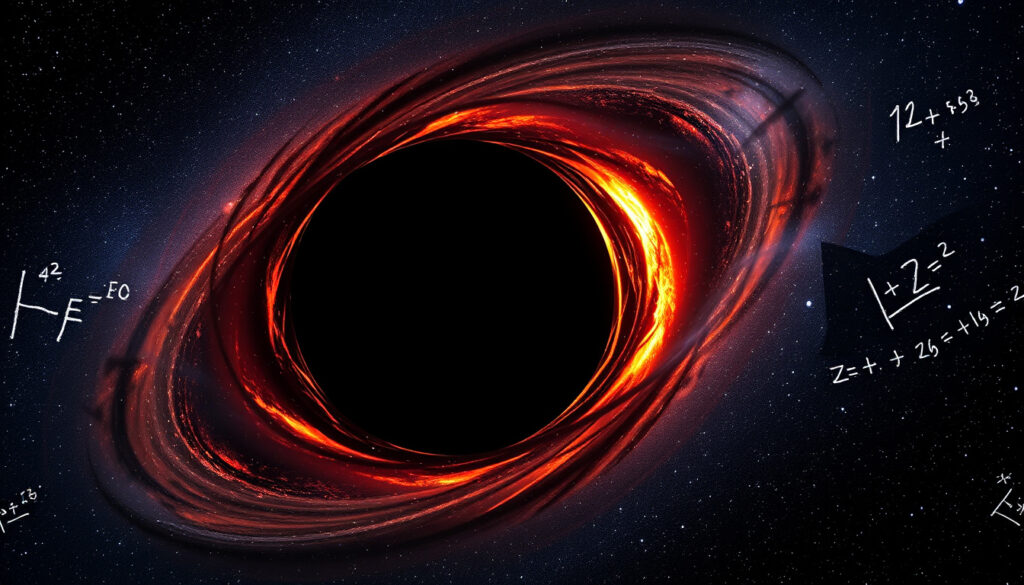
Stephen Hawking defied every expectation. Diagnosed with a motor neuron disease at 21 and given two years to live, he went on to become one of the most celebrated physicists of the 20th century — and a cultural icon who made black holes and quantum cosmology feel accessible to millions, looking beyond the wheelchair and the iconic voice synthesizer to explore his true legacy as a scientist, communicator, and activist.
Full Name: Stephen William Hawking ·
Born: 8 January 1942, Oxford, England ·
Died: 14 March 2018, Cambridge, England ·
Known For: Hawking radiation, A Brief History of Time ·
Illness: Amyotrophic lateral sclerosis (ALS) ·
Major Award: Presidential Medal of Freedom (2009)
Quick snapshot
- Born 8 January 1942 (Wikipedia)
- Died 14 March 2018 (The New York Times)
- Diagnosed with ALS at age 21 (ABC News)
- Proposed Hawking radiation in 1974 (University of Cambridge)
- Exact IQ score (often speculated but unverified)
- Personal details about his first marriage’s difficulties
- 1942: Born in Oxford (Wikipedia)
- 1974: Announced Hawking radiation (University of Cambridge)
- 1988: Published A Brief History of Time (The New York Times)
- 2018: Died in Cambridge (The New York Times)
- Ongoing research into black hole information paradox builds on Hawking’s work (University of Cambridge)
- Hawking’s archives and legacy preserved through the Stephen Hawking Foundation (University of Cambridge)
Nine key facts about Hawking’s life and career, one pattern: extraordinary achievement against staggering odds.
| Label | Value |
|---|---|
| Full Name | Stephen William Hawking |
| Born | 8 January 1942, Oxford, England |
| Died | 14 March 2018, Cambridge, England |
| Occupation | Theoretical physicist, cosmologist, author |
| Known For | Hawking radiation, A Brief History of Time, black hole thermodynamics |
| Spouse | Jane Wilde (m. 1965; div. 1995), Elaine Mason (m. 1995; div. 2006) |
| Children | Robert, Lucy, Timothy |
| Alma Mater | University of Oxford (BA), University of Cambridge (PhD) |
| Awards | Presidential Medal of Freedom, Copley Medal, Wolf Prize, Fundamental Physics Prize |
The implication: Hawking’s career spanned five decades of groundbreaking research, public engagement, and personal resilience.
What is Stephen Hawking actually famous for?
Hawking’s greatest feat wasn’t just his physics — it was making the most mind-bending ideas in cosmology feel like something anyone could grasp. That rare combination of research and reach is what cemented his fame.
His contributions to black hole physics
- Hawking proposed the area theorem for black holes in 1970, showing that their event horizon area never decreases (Wikipedia).
- He helped unify quantum mechanics and general relativity in the context of black holes and the early universe (University of Cambridge).
The discovery of Hawking radiation
- In 1974, Hawking predicted that black holes emit radiation due to quantum effects near the event horizon — now known as Hawking radiation (University of Cambridge).
- This discovery revolutionized theoretical physics, suggesting that black holes are not permanent but can evaporate over time.
His bestselling book A Brief History of Time
- Published in 1988, it stayed on the Sunday Times bestseller list for 237 weeks (Wikipedia).
- It sold over 10 million copies worldwide (The New York Times).
His role as a science communicator
- Hawking became “one of science’s great popularisers,” according to BBC Teach.
- He made television appearances on The Simpsons, Star Trek: The Next Generation, and The Big Bang Theory.
- The University of Cambridge describes him as an “outstanding communicator” whose popularisation efforts left an “indelible legacy” (University of Cambridge Philanthropy).
What this means: Hawking’s fame rests on a foundation of original science, but the superstructure was built through his ability to translate complex ideas into a language the public could feel excited about.
What was Stephen Hawking’s final warning?
Hawking believed humanity’s intelligence was its greatest asset and its greatest threat. His warnings about AI, aliens, and climate change all shared one thread: our future depends on how responsibly we wield our own power.
Warning about artificial intelligence
- Hawking warned that AI could surpass human intelligence and “develop a will of its own” that may conflict with our interests (Future of Life Institute).
- He called for careful regulation and research into AI safety.
Warning about alien contact
- He cautioned against actively broadcasting our presence to alien civilizations, comparing it to Columbus’ arrival in the Americas (BBC Teach).
- He believed the outcome could be disastrous for humanity.
Warning about climate change and nuclear war
- Hawking called climate change a “danger” that humanity must address collectively (Future of Life Institute).
- He also cited nuclear war as an existential risk, urging global cooperation.
The pattern: Hawking’s warnings were not doomsday prophecies but rational assessments of probabilities. He used his platform to push for proactive measures, not fear.
What did Stephen Hawking say about God?
His atheism and rejection of a creator
- Hawking was an outspoken atheist. In The Grand Design (2010), he argued that the laws of physics can fully explain the universe without invoking a creator (Wikipedia).
- His famous line: “Because there is a law such as gravity, the universe can and will create itself from nothing.”
His statement that the universe didn’t need a god
- At a 2014 conference, Hawking said, “What is the concept of God? It is a question that should be answered by science, not by faith.”
His response to the question of what came before the Big Bang
- Hawking proposed that time itself began at the Big Bang; asking what came before is like asking what is north of the North Pole.
Why this matters: Hawking’s position on God was not merely personal — it reflected his view that science could address ultimate questions previously reserved for religion. This made him a polarising figure in some circles, but it also clarified the boundaries of his worldview.
What was Stephen Hawking’s illness?
Amyotrophic lateral sclerosis (ALS) diagnosis
- Hawking was diagnosed with ALS in 1963 at age 21, shortly after beginning his PhD (ABC News).
- Doctors gave him only two years to live.
Progression of the disease
- ALS gradually paralysed his body, but his cognitive function remained intact.
- By the 1970s he was wheelchair-bound, and in 1985 he lost his ability to speak after a tracheostomy (ITV News on YouTube).
How he adapted to communicate and work
- He used a speech-generating device that was initially controlled by a hand switch, and later by a single cheek muscle via an infrared sensor.
- “He became a symbolic figure of triumph over adversity,” notes the University of Cambridge (University of Cambridge).
The catch: Hawking’s disability was central to his public image, but he resisted being defined by it. He once said, “My expectations were reduced to zero when I was 21. Everything since then has been a bonus.”
Who came first, Einstein or Hawking?
Einstein died the same year Hawking turned 13 and began his journey into physics. Hawking never met Einstein, but he spent his career standing on Einstein’s shoulders — and then reshaping the view.
Three dimensions of comparison, one pattern: Hawking extended Einstein’s theories in ways Einstein himself could not have imagined.
| Attribute | Albert Einstein | Stephen Hawking |
|---|---|---|
| Born | 14 March 1879, Ulm, Germany | 8 January 1942, Oxford, England |
| Died | 18 April 1955, Princeton, USA | 14 March 2018, Cambridge, England |
| Major field | Theory of relativity, quantum theory | Black hole physics, quantum cosmology |
| Key contribution | E=mc², general relativity | Hawking radiation |
| Public engagement | Peace activism, public intellectual | Science populariser, disability advocate |
| Nobel Prize | Yes (1921, photoelectric effect) | No |
The trade-off: While Einstein reshaped the very fabric of physics in the early 20th century, Hawking brought those ideas into the quantum age and made them accessible to the public. Both changed how we understand the universe.
Did Stephen Hawking support LGBTQ?
His support for LGBTQ rights
- Hawking publicly supported the LGBTQ community. In 2013, he appeared in a video for the Human Rights Campaign calling for marriage equality (Human Rights Campaign).
- He signed a letter opposing conversion therapy and discrimination.
Opposition to conversion therapy
- Hawking was a signatory to an open letter from the Royal College of Psychiatrists calling for a ban on conversion therapy in the UK (BBC News).
His legacy as an ally
- The Stephen Hawking Foundation continues to support research and advocacy that includes LGBTQ equality as part of its broader human rights work.
The implication: Hawking used his platform not just for science but for social justice. His LGBTQ advocacy was part of a wider pattern of speaking out against discrimination in all forms.
Timeline of Stephen Hawking’s life
The timeline shows a man who did his most revolutionary work in his 30s, then spent the next four decades consolidating that legacy — and expanding it into public life. The pattern: his output accelerated after his health stabilised in the late 1980s.
- 1942: Born in Oxford, England (Wikipedia)
- 1959: Entered University College, Oxford (Wikipedia)
- 1962: Began PhD at Cambridge; diagnosed with ALS (Wikipedia)
- 1965: Married Jane Wilde; completed PhD (Wikipedia)
- 1970: Proposed area theorem for black holes (Wikipedia)
- 1974: Announced Hawking radiation (University of Cambridge)
- 1979: Became Lucasian Professor of Mathematics at Cambridge (Wikipedia)
- 1988: Published A Brief History of Time (The New York Times)
- 2009: Awarded Presidential Medal of Freedom (Wikipedia)
- 2014: Film The Theory of Everything released (The New York Times)
- 2018: Died in Cambridge (The New York Times)
The pattern: Hawking’s life was a race against time — and he won. He outlived the two-year prognosis by more than five decades, producing a body of work that will influence physics for generations.
Confirmed facts vs. what remains unclear
Confirmed facts
- Born 8 January 1942 (Wikipedia)
- Died 14 March 2018 (The New York Times)
- Diagnosed with ALS at 21 (ABC News)
- Proposed Hawking radiation in 1974 (University of Cambridge)
- Published A Brief History of Time in 1988 (The New York Times)
- Presidential Medal of Freedom (2009) (Wikipedia)
What’s unclear
- Exact IQ score (often speculated but unverified)
- Details of his first marriage’s private struggles
- Whether Hawking radiation has ever been observed (still theoretical)
Why this matters: The boundary between confirmed and unclear in Hawking’s life is surprisingly narrow. Most major facts are well-documented; the gaps are mostly in personal speculation and unverifiable metrics like IQ.
Quotes from and about Stephen Hawking
“Look up at the stars and not down at your feet. Try to make sense of what you see, and wonder about what makes the universe exist. Be curious.”
— Stephen Hawking, Brief Answers to the Big Questions
“God may exist, but science can explain the universe without the need for a creator.”
— Stephen Hawking, interview with El Mundo (2015)
“I like the fact that even in his final years, he could go to strip clubs. You have to respect a man who, when told his body is a prison, decides to let his mind wander there too.”
— Robin Williams, stand-up comedy (attributed)
Editor’s note: Robin Williams’ quote, while humorous, captures the paradox of Hawking’s life — a man whose physical limitations could not contain his intellectual or social curiosity.
For Stephen Hawking, the final verdict is clear: he was not just a physicist but a force who redefined what one human being can achieve against impossible odds. For readers seeking a role model of resilience and intellect, his life offers a template: stay curious, speak out, and never let circumstance silence you.
carolinianuncg.com, avaloncelebrations.com, pursuit.unimelb.edu.au, history.starmus.com
For those seeking a more detailed account, a comprehensive overview of Hawkings life provides further insight into his remarkable journey.
Frequently asked questions
What was Stephen Hawking’s net worth?
At the time of his death, Hawking’s net worth was estimated at around £20 million (approx. $25 million), primarily from book sales, speaking fees, and academic appointments. Exact figures are not publicly confirmed.
How did Stephen Hawking die?
He died peacefully at his home in Cambridge on 14 March 2018, at the age of 76. The cause was complications from amyotrophic lateral sclerosis (ALS), according to The New York Times.
What is Hawking radiation?
Hawking radiation is a theoretical prediction that black holes emit particles due to quantum effects near the event horizon, causing them to lose mass and eventually evaporate. Announced in 1974, it remains one of the most important ideas in theoretical physics (University of Cambridge).
What is Stephen Hawking’s most famous book?
A Brief History of Time (1988) is his most famous work, having sold over 10 million copies and spent 237 weeks on the Sunday Times bestseller list (Wikipedia).
Did Stephen Hawking have children?
Yes, he had three children with his first wife Jane Wilde: Robert (born 1967), Lucy (born 1970), and Timothy (born 1979).
What was Stephen Hawking’s IQ?
His IQ was never publicly verified. Estimates range from 160 to over 200, but these are speculative — no official test results have been released.
Did Stephen Hawking win a Nobel Prize?
No. Despite the profound impact of Hawking radiation, direct experimental confirmation has not yet been achieved, and the Nobel committee typically requires empirical validation. He did, however, receive many other major awards (The New York Times).
What is the Stephen Hawking Foundation?
The Stephen Hawking Foundation was established to continue his legacy by supporting research into cosmology, astrophysics, and fundamental physics, as well as advocacy for disability rights, scientific communication, and LGBTQ equality.
Related stories




Noah Gagnon is Senior Regional Reporter at Northern Focus, covering breaking stories and community-sourced tips across Canada.