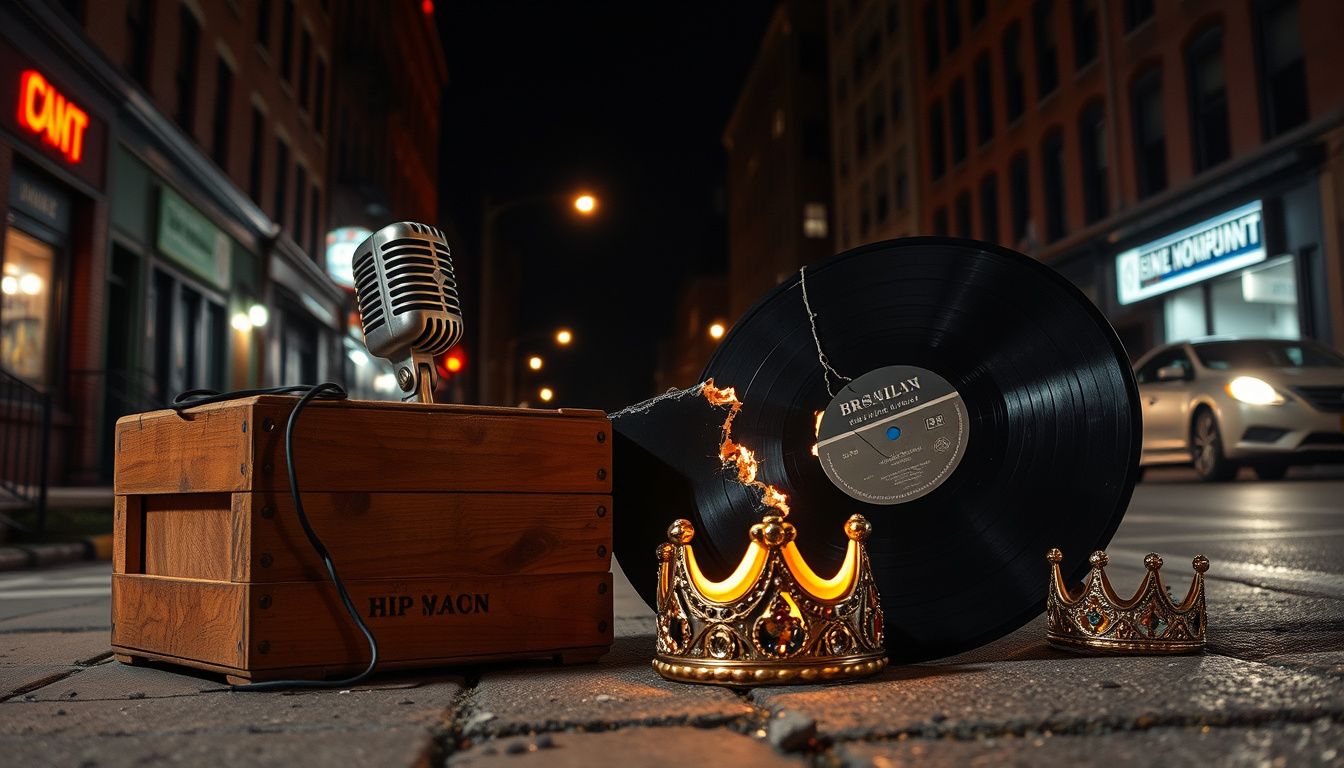
Few figures in hip-hop loom as large as the man who called himself the Notorious B.I.G. — a storyteller who turned Brooklyn grit into platinum records. But behind the legend lies a life cut short at 24, an unsolved murder, and a feud that still fuels debate. This article separates the confirmed facts from the lingering questions around Biggie Smalls, his rivalry with Tupac Shakur, and the night of March 9, 1997.
Born: May 21, 1972 ·
Died: March 9, 1997 ·
Full Name: Christopher George Latore Wallace ·
Stage Names: The Notorious B.I.G., Biggie Smalls ·
Studio Albums: 2 (Ready to Die, Life After Death) ·
Children: 2
Quick snapshot
- Biggie Smalls was shot four times on March 9, 1997 (Los Angeles Times (local news outlet))
- His birth and death dates are May 21, 1972 and March 9, 1997 (Britannica (encyclopedia))
- He released two studio albums while alive: Ready to Die and Life After Death (Britannica (encyclopedia))
- Tupac Shakur died on September 13, 1996 from gunshot wounds (Biography.com (biography publisher))
- Exact last words of both Biggie and Tupac are disputed (People (celebrity news magazine))
- Whether Biggie cried when Tupac died is reported but not independently confirmed (The Guardian (major newspaper))
- Whether Biggie had prior knowledge of the Quad Studios shooting remains speculative (People (celebrity news magazine))
- No conclusive evidence links Biggie’s murder directly to retaliation for Tupac’s death (Reuters (wire service))
- November 30, 1994: Tupac shot at Quad Studios — the event that sparked the feud (People (celebrity news magazine))
- September 13, 1996: Tupac dies from gunshot wounds in Las Vegas (Biography.com (biography publisher))
- March 9, 1997: Biggie killed in drive-by in Los Angeles (Britannica (encyclopedia))
- Both murders remain unsolved; no charges have been filed (The Guardian (major newspaper))
- Public interest continues to fuel documentaries, books, and renewed investigations (Reuters (wire service))
Six key facts, one pattern: the numbers are settled, but the narrative remains contested.
| Attribute | Value |
|---|---|
| Full Name | Christopher George Latore Wallace |
| Born | May 21, 1972 |
| Died | March 9, 1997 |
| Cause of Death | Gunshot wounds (drive-by shooting) |
| Number of Studio Albums | 2 |
| Children | 2 (T’yanna, C.J.) |
How many times was Biggie shot?
According to the Los Angeles Times (local news outlet), Biggie Smalls was shot four times in the March 1997 drive-by. He was sitting in the front passenger seat of a Chevrolet Suburban leaving a party at the Petersen Automotive Museum. The autopsy report, released 15 years later, confirmed the four gunshot wounds.
He was transported to Cedars-Sinai Medical Center, where he was pronounced dead. The shooter and motive remain unknown, as Britannica (encyclopedia) notes.
Four bullets ended a life that had produced only two studio albums — a ratio that underscores how much more Biggie could have given, and how little we still know about who pulled the trigger.
Why did Tupac start hating Biggie?
The feud between Tupac Shakur and Biggie Smalls is traced by most sources to a single night: November 30, 1994. Tupac was shot and robbed at Quad Studios in Times Square. He believed that Biggie and Sean “Puff Daddy” Combs had prior knowledge of the attack. People (celebrity news magazine) reports that Tupac allegedly gave Biggie the finger as he was stretchered out of the building.
After his release from jail in 1995, Tupac publicly accused Biggie and Combs in interviews. The conflict escalated through diss tracks — Tupac’s “Hit ‘Em Up” being the most direct retaliation — and was amplified by the label rivalry between Bad Boy Entertainment (Biggie’s label) and Death Row Records (Tupac’s label), as Britannica (encyclopedia) describes.
The feud that defined an era may have been built on a misunderstanding: Tupac’s belief that Biggie’s song “Who Shot Ya?” was a diss track, though People (celebrity news magazine) notes the timing makes it unlikely.
Why did 2Pac think Biggie shot him?
Tupac’s suspicion that Biggie was involved in the Quad Studios shooting stemmed from their prior friendship and the fact that Biggie and Junior M.A.F.I.A. were reportedly present at the studio that night. People (celebrity news magazine) cites secondary sources saying Tupac saw Biggie’s entourage and interpreted their presence as complicity. No evidence has ever emerged to confirm this theory.
What did 2Pac say before he died?
Tupac’s last words are a matter of conflicting accounts. Some reports, cited by Biography.com (biography publisher), state that after being shot in Las Vegas on September 7, 1996, he was conscious at the scene and reportedly said “Fuck you” to police officers. Other accounts claim he was unconscious immediately. He died on September 13, 1996 from respiratory failure due to gunshot wounds.
What were Biggies’ last words?
Biggie’s final words are another fact that refuses to settle. The most commonly reported version — “I’m not ready to die” — was allegedly spoken to his friend Damion “D-Roc” Butler as the bullets hit. But People (celebrity news magazine) notes that witnesses gave conflicting accounts, and no official police report confirms any phrase.
What is known: the shooting occurred around 12:45 a.m. on March 9, 1997. Biggie was in the front passenger seat, the car stopped at a red light outside the Petersen Automotive Museum. A black Chevrolet Impala pulled up alongside and opened fire. The Los Angeles Times (local news outlet) reported that he was hit four times, with the fatal bullet entering his left side.
The “I’m not ready to die” quote has become iconic, but its origin is a single hearsay account. Treating it as established fact risks building a legend on unverified testimony.
Did Biggie cry when 2Pac died?
When Tupac died on September 13, 1996, Biggie was reportedly in shock. The Guardian (major newspaper) describes the feud as a “perilous public conflict” that had escalated through lyrics and interviews — but behind the scenes, Biggie allegedly broke down in tears upon hearing the news.
This account comes from associates and is not corroborated by independent sources. In a 1996 interview, Biggie expressed grief, saying “It’s a shame what happened.” He also referenced Tupac in his posthumous music, including the track “I’m Missing You.” The pattern: the feud was real, but the enmity may have been more media-driven than personal.
Why this matters: if Biggie did cry, it suggests a complexity that the “East Coast vs. West Coast” narrative often flattens. Two young men, both products of the same industry, caught in a spiral neither could control.
What did 2Pac say before he died?
As noted earlier, Tupac’s last words are disputed. The most widely repeated account — that he said “Fuck you” to Las Vegas police — comes from a Biography.com (biography publisher) article that cites unnamed sources. Other reports say he was unconscious at the scene and never spoke.
The medical record is clear: Tupac suffered four gunshot wounds, including one to the chest, and died six days later from respiratory failure. The Reuters (wire service) coverage of Biggie’s autopsy notes that Tupac’s murder also remained unsolved, and that various theories linked the two homicides.
The trade-off: in the absence of hard evidence, the public clings to the most dramatic version — but the truth is that neither man’s last words can be verified.
Timeline of key events
- – Christopher Wallace born in Brooklyn, New York (Britannica (encyclopedia))
- – Debut album Ready to Die released (Britannica (encyclopedia))
- – Tupac Shakur shot and robbed at Quad Studios; begins suspecting Biggie (People (celebrity news magazine))
- – Tupac Shakur dies from gunshot wounds (Biography.com (biography publisher))
- – Biggie Smalls killed in drive-by shooting in Los Angeles (Los Angeles Times (local news outlet))
- – Posthumous album Life After Death released (Britannica (encyclopedia))
What we know vs. what we don’t
Confirmed facts
- Biggie Smalls was shot four times on March 9, 1997 (Los Angeles Times)
- His birth and death dates are May 21, 1972 and March 9, 1997 (Britannica)
- He released two studio albums while alive (Britannica)
- Tupac Shakur died on September 13, 1996 (Biography.com)
What remains unclear
- Exact last words of both Biggie and Tupac (People notes conflicting accounts)
- Whether Biggie cried when Tupac died (reported but not independently verified) (The Guardian)
- Whether Biggie had prior knowledge of the Quad Studios shooting (People cites it as speculation)
- No conclusive evidence links Biggie’s murder directly to retaliation for Tupac’s death (Reuters)
Voices from the era
“Biggie knew what happened. He was there. He saw me get shot. And he didn’t say nothing.”
— Tupac Shakur, in a 1995 interview, accusing Biggie and Puff Daddy of setting up the Quad Studios shooting (People (celebrity news magazine))
“It’s a shame what happened. I don’t want nobody to think I’m happy about it.”
— Biggie Smalls, in a 1996 interview, reacting to Tupac’s death (The Guardian (major newspaper))
“The vehicle was struck multiple times. The victim was transported to Cedars-Sinai Medical Center, where he was pronounced dead.”
— Los Angeles Police Department report, as cited by Los Angeles Times (local news outlet)
Two murders, no charges, and a legacy that still sells out arenas. For a fan or a historian, the choice is clear: either accept the gaps in the record, or let the myth fill them. But the myth — the feud, the last words, the tears — is built on claims that range from hearsay to unresolved. The real story of Biggie Smalls may be less about the answers than about how many questions remain.
Related reading: John Denver: Official Cause of Death, Last Words & Net Worth · Taylor Hawkins: Cause of Death, Family, and Tributes
insightbritain.co.uk, en.wikipedia.org, entertainmentnow.com, en.wikipedia.org, latimes.com, americansongwriter.com
Frequently asked questions
How tall was Biggie Smalls?
Biggie Smalls was reported to be 6 feet 3 inches (1.91 m) tall, though official records vary slightly.
Who was Biggie Smalls married to?
He was married to Faith Evans, the R&B singer, from 1994 until his death in 1997.
How many children did Biggie Smalls have?
He had two children: daughter T’yanna (born 1993) and son C.J. (Christopher Jordan Wallace, born 1996).
What is Biggie Smalls’ most famous song?
“Juicy” from his debut album Ready to Die is widely considered his signature track, along with “Big Poppa” and “Hypnotize.”
Where is Biggie Smalls buried?
He is buried in a private mausoleum at Franklin Memorial Park in North Brunswick, New Jersey.
What was Biggie Smalls’ net worth at the time of his death?
Estimates vary, but his net worth at death was reportedly around $10 million, largely from music royalties and publishing.
How did Biggie Smalls get his name?
The nickname “Biggie Smalls” came from a character in the 1975 film Let’s Do It Again, and “The Notorious B.I.G.” was a later stage name.
Related stories


Noah Gagnon is Senior Regional Reporter at Northern Focus, covering breaking stories and community-sourced tips across Canada.