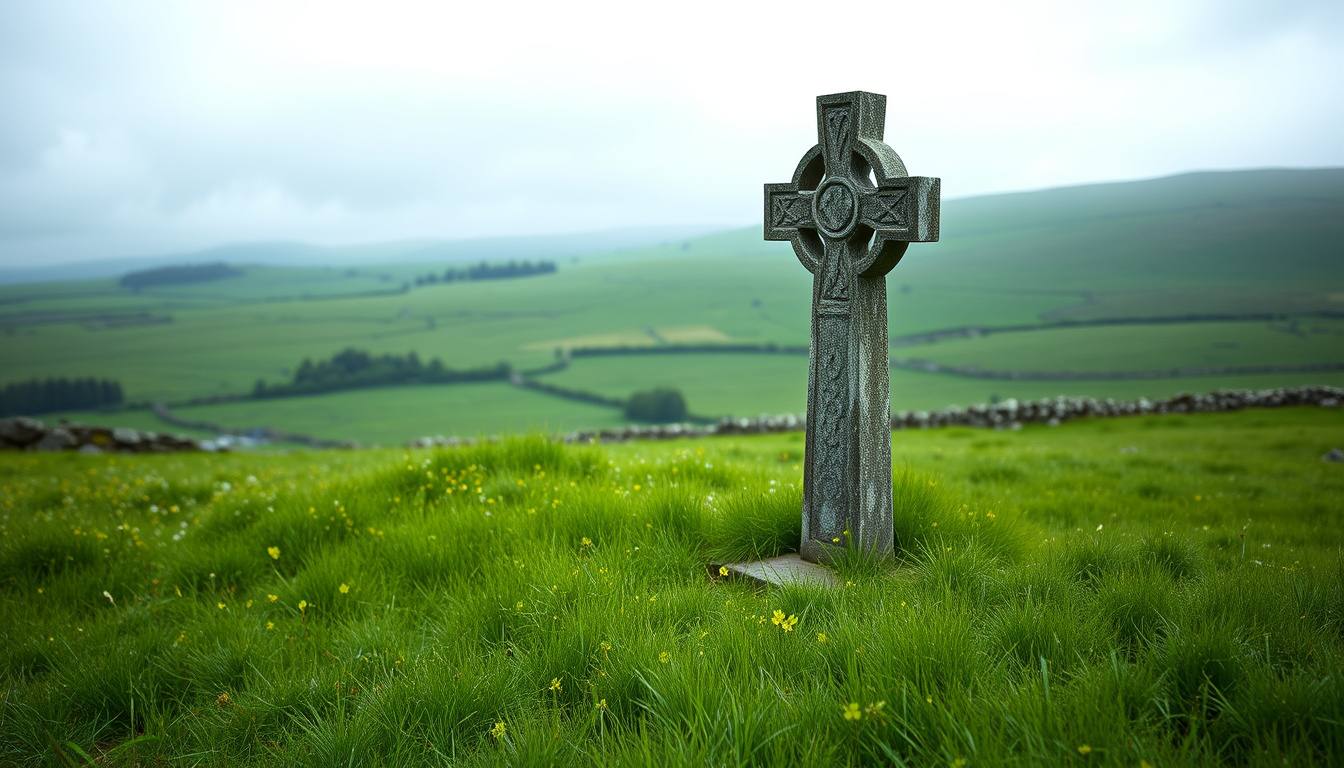
There’s something curious about St. Patrick: almost everything most people think they know is a story written centuries after his death. But the real Patrick—a fifth‑century Romano‑British former slave—is far more compelling than any legend.
Patronage: Patron saint and national apostle of Ireland · Feast day: March 17 (St. Patrick’s Day) · Lifespan: 5th century (c. 385–461 AD) · Known for: Bringing Christianity to Ireland; legendary driving out of snakes
Quick snapshot
- Born in Roman Britain (c. 385) – Britannica (encyclopedia)
- Kidnapped at age 16 by Irish raiders – Irish Myths (folklore resource)
- Six years as a shepherd slave in Ireland – Irish Myths (folklore resource) (Britannica (encyclopedia))
- Became a bishop after years of study – Wikipedia (open encyclopedia)
- Returned to Ireland in 432 AD to preach – Irish Folklore (cultural site)
- Used the shamrock as a teaching tool (first recorded 1726) – Baltimore Magazine (regional publication)
- Driving snakes from Ireland – Britannica (encyclopedia) (Leavitt Group (news site))
- Raising the dead and other miracles – Britannica (encyclopedia) (Leavitt Group (news site))
- Shamrock‐Trinity connection (no contemporary evidence) – Leavitt Group (news site)
- Patron saint of Ireland – Britannica (encyclopedia)
- Feast day March 17 celebrated globally – Wikipedia (open encyclopedia)
- Wrote the Confessio and Epistola ad Coroticum – Irish Myths (folklore resource)
Five key dates and roles form the skeleton of Patrick’s story — each grounded in the few contemporary sources we have.
| Attribute | Value | Source |
|---|---|---|
| Born | c. 385 AD, Roman Britain | Britannica (encyclopedia) |
| Died | March 17, 461 AD, Saul, Ireland | Britannica (encyclopedia) |
| Feast Day | March 17 (St. Patrick’s Day) | Wikipedia (open encyclopedia) |
| Patron of | Ireland, engineers, paralegals, against snake bites | Wikipedia (open encyclopedia) |
| Known for | Apostle of Ireland, shamrock, snakes legend | Britannica (encyclopedia) |
What is Saint Patrick known for?
His role as missionary and bishop
- Patrick is credited with bringing Christianity to a large part of Ireland, though a missionary named Palladius had been sent in 431 AD “to a people who believed in Christ” – Irish Folklore (cultural site)
- He is the primary patron saint of Ireland – Britannica (encyclopedia)
The pattern: Patrick was not the first Christian in Ireland, but he was the most successful and enduring. His mission gave the island a distinct Christian identity that would survive the Viking age and beyond.
Legends of driving snakes from Ireland
- Scientists confirm Ireland never had snakes after the last Ice Age – Britannica (encyclopedia)
- The story is interpreted as a metaphor for Patrick’s defeat of pagan “serpents” – Britannica (encyclopedia)
The snake legend is the most‑repeated falsehood about Patrick. Every year, millions celebrate a miracle that never occurred — and Patrick’s own writings say nothing about it.
The implication: the snake story tells us more about medieval storytelling than about fifth‑century Ireland. It’s a powerful symbol, not a historical record.
Association with the shamrock
- Patrick never mentions the shamrock in his autobiography, the Confessio – Leavitt Group (news site)
- The first reference to the shamrock‑Trinity link comes from a botanical catalogue in 1726 – Baltimore Magazine (regional publication)
Why this matters: the shamrock has become the universal symbol of both Patrick and Ireland, but its connection to the saint is a 1,200‑year‑afterthought.
Is Saint Patrick Irish or Scottish?
His birthplace
- Patrick was born in Roman Britain, not Ireland or Scotland – Britannica (encyclopedia)
- The precise location (Banna Venta Berniae) is uncertain – Britannica (encyclopedia)
Romano‑British background
- His father Calpornius was a deacon and a Roman official – Baltimore Magazine (regional publication)
- He was raised in a Christian Latin‑speaking household – Irish Myths (folklore resource)
Kidnapping by Irish raiders
- At age 16 in 403 AD, Irish pirates captured him from his family estate – Irish Myths (folklore resource)
- He was sold to King Miliucc and forced to herd sheep in Antrim – Irish Myths (folklore resource)
The pattern: Patrick’s link to Scotland is a guess‑based tradition. The only thing certain is he was not born in Ireland — a fact that surprises many.
Did St. Patrick speak Irish?
Language exposure during captivity
- He learned the Irish language during his six years as a slave – Britannica (encyclopedia)
- His writings suggest he became fluent – Wikipedia (open encyclopedia)
Use of Latin
- His surviving works, Confessio and Epistola ad Coroticum, are written in Latin – Irish Myths (folklore resource)
- His Latin is described as “rustic” compared to continental standards – Wikipedia (open encyclopedia)
Influence on Irish language
- He is credited with adapting the Latin alphabet to write Irish – Wikipedia (open encyclopedia)
- No direct evidence survives, but Irish Ogham script predates him – Britannica (encyclopedia)
What this means: Patrick was bilingual — he preached in Irish and wrote in Latin. That linguistic skill was the key to his missionary success.
What are 10 facts about St. Patrick?
His real name
- His birth name was Maewyn Succat; he adopted Patrick after ordination – Baltimore Magazine (regional publication)
Birthplace not Ireland
- He was born in Roman Britain, not on the island he would later evangelize – Britannica (encyclopedia)
Slavery and escape
- He spent six years as a shepherd slave, then escaped after a vision – Irish Myths (folklore resource)
Vision and return to Ireland
- After returning to Britain, he had a vision of the Irish pleading for him to come back – Britannica (encyclopedia)
- He studied in Gaul and was ordained bishop before returning – Wikipedia (open encyclopedia)
The man who would become Ireland’s patron saint was its former slave. That experience shaped his entire mission — and made him the most unlikely national hero.
The pattern from these facts: Patrick’s life is a reversal story — from captive to liberator, from outsider to apostle.
Why is St. Patrick’s Day celebrated?
Religious observance
- Originally a feast day in the 17th century honoring Patrick’s death – Wikipedia (open encyclopedia)
- Recognized by the Catholic Church, Anglican Communion, and others – Britannica (encyclopedia)
Cultural celebration
- Became a public holiday in Ireland in 1903 – Wikipedia (open encyclopedia)
- Modern parades began in the United States, not Ireland – Britannica (encyclopedia)
Modern traditions
- Today it’s a global celebration of Irish diaspora and heritage – Britannica (encyclopedia)
- Wearing green, parades, and public drinking are secular customs – Wikipedia (open encyclopedia)
The trade‑off: a religious feast has become a worldwide cultural party. For Irish communities, the day is both a sacred memory and a secular celebration of identity.
Confirmed facts vs. what remains unclear
Confirmed facts
- St. Patrick was a 5th‑century Romano‑British missionary in Ireland – Britannica (encyclopedia)
- He wrote the Confessio – Irish Myths (folklore resource)
- His feast day is March 17 – Wikipedia (open encyclopedia)
- He used the shamrock as a symbol (first recorded 1726) – Baltimore Magazine (regional publication)
What’s unclear
- Exact birthplace (Banna Venta Berniae location unknown) – Britannica (encyclopedia)
- Whether he drove snakes from Ireland (no snakes existed) – Britannica (encyclopedia)
- Details of his early life before captivity – Irish Myths (folklore resource)
“Saint Patrick was a fifth‑century Romano‑British Christian missionary and bishop in Ireland. Known as the ‘Apostle of Ireland’, he is the primary patron saint of Ireland.” – Wikipedia (open encyclopedia)
“Many popular beliefs about St. Patrick are myths, including the idea that he was Irish.” – Dr. Douglas V. Smith, Baylor University historian
“Patrick was not his real name; he was born Maewyn Succat in Roman Britain.” – Tourism Ireland (official tourism board)
For anyone who has ever worn green on March 17 and wondered whether the stories are true, the answer is clear: the man himself is far more interesting than the legends. The real St. Patrick — a former slave who chose to return to his captors’ land, learned their language, and left a lasting Christian imprint — is a story that needs no embellishment. For Irish readers and global celebrants alike, the challenge is to honour the historical figure, not the myth.
Related reading: **Sam Bennett: Irish Cyclist’s Comeback After Heart Procedure** · **New Balance 9060 Black: Sizing, Comfort & Ireland Buying Guide**
For those interested in the real story of Saint Patrick, the real story of Saint Patrick offers a thorough account of his life and legacy.
Frequently asked questions
What is the shamrock legend associated with St. Patrick?
The story says Patrick used a three‑leaf shamrock to explain the Christian Trinity. However, no contemporary source mentions this; the first written record dates to 1726 – Baltimore Magazine (regional publication).
Why do people wear green on St. Patrick’s Day?
Green is associated with Ireland’s landscape and the green stripe in the Irish flag. Originally the colour associated with Patrick was blue; green became popular in the 19th century – Wikipedia (open encyclopedia).
Does St. Patrick’s Day have religious origins?
Yes, it began as a feast day in the 17th century to honour Patrick’s death on March 17. It is still observed as a holy day in the Catholic and Anglican churches – Britannica (encyclopedia).
Why is the shamrock a symbol of Ireland?
The shamrock became an emblem of Irish identity through its association with St. Patrick. By the 19th century it was used as a political and cultural symbol during the Irish nationalist movement – Britannica (encyclopedia).
What is the history of St. Patrick’s Day parades?
The first known parade was not in Ireland but in New York City in 1762, organised by Irish soldiers in the British army. Dublin’s modern parade started only in 1931 – Wikipedia (open encyclopedia).
Did St. Patrick really drive snakes out of Ireland?
No. Ireland has never had snakes due to its post‑Ice Age geography. The story is a metaphor for Patrick’s efforts to drive out pagan beliefs – Britannica (encyclopedia).
How is St. Patrick’s Day celebrated in Ireland today?
It is a public holiday. Many attend church, then celebrate with parades, music, dancing, and family gatherings. The day is both religious and cultural – Tourism Ireland (official tourism board).
Related stories





Kevin Sullivan covers community events, neighbourhoods and local culture.