If you’ve ever stood at a coffee shop counter wondering whether the macchiato is just a smaller latte, you’re not alone — the short drink with a dollop of foam has a surprisingly different identity rooted in Italian bar tradition and now stretched across global menus. This guide breaks down what a macchiato actually is, how it stacks up against latte, cappuccino, and more, and why the milk-to-espresso ratio is the only thing that really matters.
Espresso shots in a traditional macchiato: 1 (single or double) ·
Milk volume in a traditional macchiato: 1–2 teaspoons (foamed) ·
Calories in a traditional macchiato (2 oz): 15–25 kcal ·
Caffeine in a single espresso shot: 63 mg ·
Milk volume in a latte (8 oz): 6–8 oz
Quick snapshot
- Macchiato is an espresso-based drink with very little milk (Methodical Coffee (specialty roaster))
- A traditional caffè macchiato uses 1–2 teaspoons of foamed milk (Philips USA (appliance manufacturer))
- The Starbucks caramel macchiato is a different drink (latte macchiato) (Coffee Chronicler (coffee education blog))
- Macchiato has less milk than latte, cappuccino, flat white, or cortado (Healthline (health information publisher))
- Exact caffeine content varies by espresso shot dose (7g vs 18g) and roast (Coffee Annan (coffee education blog))
- Whether a macchiato is “healthier” than a latte depends on dietary goals (calories vs. caffeine preference) (Healthline (health information publisher))
- Pre-1950s: Macchiato emerges in Italian coffee bars as a way to mark an espresso order with a tiny dot of milk (Limini Coffee (specialty coffee retailer))
- Third-wave coffee shops continue to refine the macchiato as a precision drink, while chains expand syrup-heavy versions (Qavashop Academy (coffee equipment specialist))
The macchiato’s key specs are straightforward:
| Attribute | Value |
|---|---|
| Origin of the name | Italian for “stained” or “marked” (Healthline (health information publisher)) |
| Traditional serving size | 2–3 oz (demitasse cup) (Methodical Coffee (specialty roaster)) |
| Espresso shots | 1 (single or double) (Coffee Chronicler (coffee education blog)) |
| Milk type | Foamed milk (steamed or frothed) (Philips USA (appliance manufacturer)) |
| Milk volume | 1–2 teaspoons (Coffee Annan (coffee education blog)) |
| Caffeine (single shot) | 63–80 mg (Healthline (health information publisher)) |
| Calories (approx.) | 15–25 kcal (Qavashop Academy (coffee equipment specialist)) |
| Common variations | Caffè macchiato, latte macchiato, caramel macchiato (Philips USA (appliance manufacturer)) |
What is a macchiato?
At its simplest, a macchiato is an espresso topped with a small amount of foam or steamed milk. The Italian word “macchiato” means stained or marked—a reference to the way a barista would mark a customer’s espresso with a tiny dot of milk to distinguish it from a plain shot. Healthline (health information publisher) notes that the drink is defined by its minimal milk, making it closer to straight espresso than to a latte.
What are the ingredients of a traditional macchiato?
- 1 shot of espresso (single or double) – provides the base and caffeine (Coffee Chronicler, coffee education blog)
- 1–2 teaspoons of frothed or steamed milk – used as a “stain” on top (Philips USA, appliance manufacturer)
- No sweeteners, syrups, or flavorings in the traditional recipe
How is a macchiato prepared?
The barista pulls a single or double espresso into a demitasse cup, then spoons a thin layer of foam onto the surface. Coffee Annan (coffee education blog) describes the classic method: milk is frothed separately, and only the foam—not the liquid milk—is used to top the coffee. The result is a 2–3 oz drink where the espresso flavor dominates.
If you want the purest espresso experience with a whisper of creaminess, the traditional macchiato is your drink. Milk functions as a seasoning, not a base.
The implication: a macchiato is not a small latte. It’s a different category—one where milk is a garnish, not a main ingredient.
What is the difference between a latte and a macchiato?
Milk volume differences: latte vs macchiato
A latte contains 6–8 oz of steamed milk with a thin layer of foam; a macchiato uses about 1–2 teaspoons of foam. Healthline (health information publisher) explains that the milk-to-espresso ratio is the primary differentiator. A latte typically uses 1–2 shots of espresso with 6–8 oz of milk, while a macchiato uses the same espresso with just a dollop of foam.
Caffeine strength: latte vs macchiato
If both drinks use a single espresso shot, the caffeine content is identical (63–80 mg). However, the macchiato tastes significantly stronger because the espresso is not diluted by a large volume of milk. Coffee Chronicler (coffee education blog) points out that perceived strength is more about flavor intensity than actual caffeine.
Taste profile: bold vs creamy
The macchiato delivers a bold, concentrated coffee taste with a smooth accent from the foam. The latte is creamy and mild, with the milk softening the espresso’s acidity.
Order a macchiato when you want coffee flavor front and center; order a latte when you want a comforting, milky drink. The same caffeine, completely different experience.
The trade-off: you sacrifice volume and creaminess for intensity. For someone watching calories, the macchiato saves roughly 130–230 kcal compared to a latte.
What is a macchiato vs cappuccino?
Foam structure differences
A cappuccino is built with equal parts espresso, steamed milk, and frothed milk—the foam is thick, airy, and stands about an inch tall. Methodical Coffee (specialty roaster) notes that cappuccino foam is dry and dense. A macchiato’s foam layer is thin—more of a cap than a cloud.
Milk volume and texture
A standard cappuccino is about 6 oz total, with roughly 2 oz of milk and 2 oz of foam. The macchiato’s milk volume is below 0.5 oz. Coffee Annan (coffee education blog) states that a latte macchiato uses 150–200ml of milk, while a cappuccino uses under 60ml—both dwarf the traditional macchiato’s single teaspoon of foam.
Serving size and espresso ratio
Cappuccino: 6 oz, 1–2 shots espresso, balance of milk and foam. Macchiato: 2–3 oz, same espresso, mostly air and foam on top. Philips USA (appliance manufacturer) summarizes the macchiato as “90% coffee, 10% milk.”
The pattern: cappuccino is a balanced trio; macchiato is espresso with an accent.
Which coffee drink has the least milk?
Ranking milk-based coffee drinks from least to most milk
Based on standard recipes and volumes from Healthline (health information publisher), Methodical Coffee (specialty roaster), and Coffee Chronicler (coffee education blog):
- Espresso macchiato – 1–2 tsp foam (≤0.3 oz milk)
- Cortado – equal parts espresso and milk (2–2.5 oz milk, total 4–5 oz)
- Flat white – 4–6 oz milk, thin microfoam
- Cappuccino – 2 oz milk + 2 oz foam (total milk ~4 oz)
- Latte – 6–8 oz milk
Why the macchiato is the least milky
The entire point of a macchiato is to “stain” the espresso, not to mix it. Even the cortado, which has a reputation for being strong, contains roughly five times more milk than a traditional macchiato.
Comparison of espresso-based drinks
Let’s line them up side by side:
Five drinks, one spectrum from pure espresso to milk-heavy. The macchiato sits at the extreme low-milk end.
| Drink | Total volume | Espresso shots | Milk volume | Calories (approx.) |
|---|---|---|---|---|
| Espresso Macchiato | 2–3 oz | 1–2 | 1–2 tsp foam | 15–25 |
| Cortado | 4–5 oz | 1 | 2–2.5 oz | 60–80 |
| Flat White | 6–8 oz | 2 | 4–6 oz | 120–180 |
| Cappuccino | 6 oz | 1–2 | ~2 oz milk + 2 oz foam | 100–150 |
| Latte | 8–12 oz | 1–2 | 6–8 oz | 150–250 |
The catch: if you’re avoiding milk for dietary reasons (lactose intolerance, calorie cutting), the macchiato is your best bet among popular coffee drinks. But be aware that chain versions often add syrups that defeat that advantage.
Is macchiato stronger than espresso?
Caffeine content comparison
A single espresso and a single macchiato contain the same amount of caffeine if both use the same espresso shot. Healthline (health information publisher) confirms that caffeine comes entirely from the espresso base. A double macchiato has twice the caffeine of a single espresso.
Perceived strength vs actual caffeine
Because the macchiato has a tiny amount of milk, the coffee flavor is more pronounced. Drinkers often perceive it as stronger even though the caffeine content is the same as a plain espresso. Qavashop Academy (coffee equipment specialist) notes that the milk softens the acidity and bitterness, making the espresso more approachable without diluting its punch.
Effect of milk on flavor intensity
Milk proteins bind with some of the bitter compounds in coffee, which can make a macchiato taste less harsh than a straight espresso, even though the coffee dose is identical. The result is a smoother, still intense drink.
A macchiato tastes milder than espresso yet contains the same caffeine. For anyone who finds espresso too sharp but still wants high caffeine, the macchiato is the ideal middle ground.
What this means: don’t order a macchiato expecting a caffeine boost over espresso; order it for a more rounded flavor. For more information on the cast, check out Repartiment de La Casa del Drac.
What is a macchiato starbucks and how does it differ?
Starbucks caramel macchiato ingredients
Starbucks’ Caramel Macchiato is a latte macchiato: steamed milk flavored with vanilla syrup, topped with espresso, and drizzled with caramel sauce. Coffee Chronicler (coffee education blog) notes that this version contains significantly more milk, sugar, and calories than a traditional macchiato—a 16 oz grande has 250 kcal and 33g of sugar.
Starbucks version vs traditional macchiato
- Traditional: 2–3 oz, espresso + foam, 15–25 kcal, no sugar.
- Starbucks caramel macchiato: 12–20 oz, milk + syrup + espresso + caramel, 150–450 kcal.
How to order a traditional macchiato at Starbucks
Ask for an “espresso macchiato” (or “caffè macchiato”). This will get you a shot of espresso with a dollop of foam, no milk, no syrup. Philips USA (appliance manufacturer) distinguishes the two clearly: the espresso macchiato is the original; the caramel macchiato is a dessert in disguise.
The trade-off: Starbucks built a global brand on a sweetened, oversized interpretation. Purists can still find the real thing, but you have to know the code.
How to make a macchiato at home?
Equipment needed: espresso machine or alternative
You’ll need an espresso machine (pump or manual), a milk frother (or steam wand), and a demitasse cup. Coffee Annan (coffee education blog) suggests a moka pot as a budget alternative, though the crema and pressure won’t match true espresso.
Step-by-step recipe for a traditional macchiato
- Pull a single or double espresso shot (1–2 oz) into a demitasse cup. Methodical Coffee (specialty roaster) recommends a double ristretto for maximum concentration.
- Steam or froth 1–2 tablespoons of milk until it forms a thick, dense foam. Philips USA (appliance manufacturer) emphasizes using whole milk for the best foam structure.
- Spoon a thin layer of foam—about 1–2 teaspoons—onto the surface of the espresso. Discard the liquid milk.
- Serve immediately. Do not stir; the foam should sit on top.
Recipe for a latte macchiato
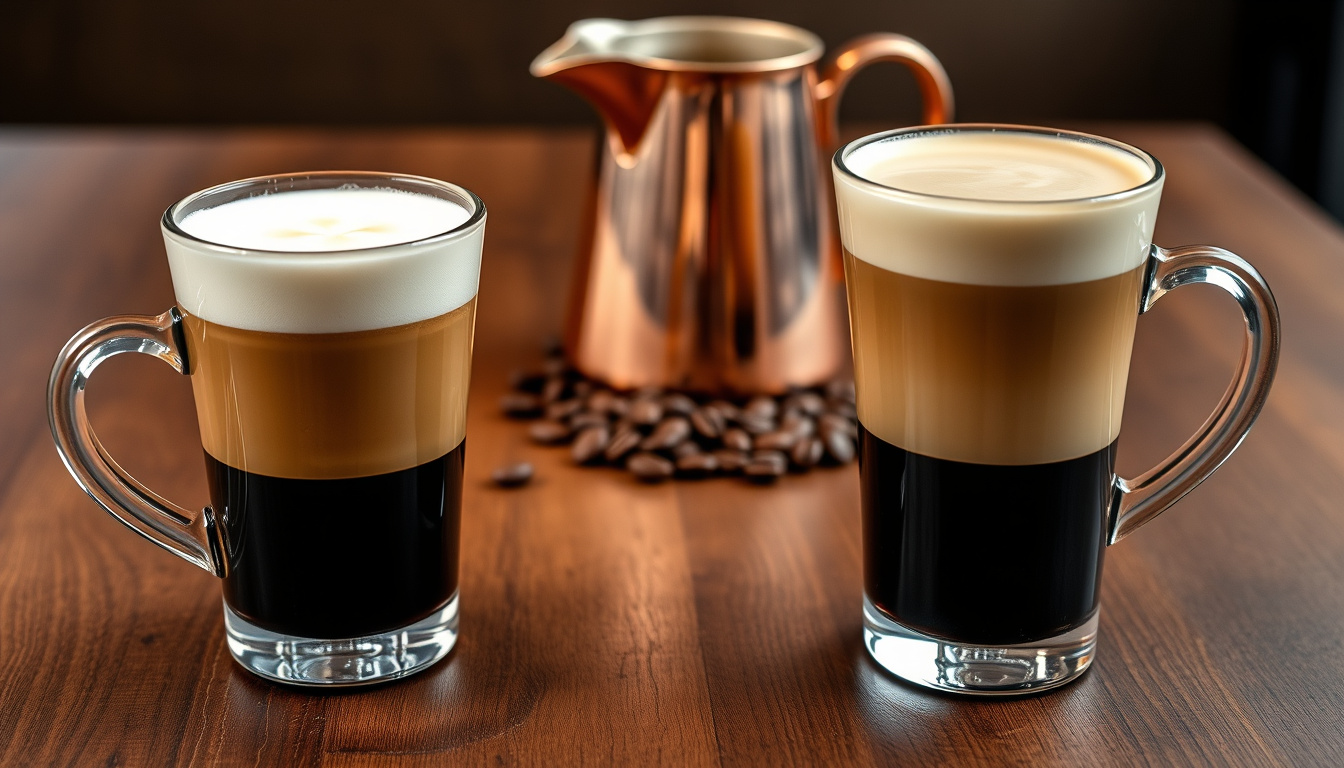
For the reverse version: steam 6–8 oz of milk, pour it into a tall glass, then gently pour a single espresso shot through the center of the foam. The layers remain distinct. Qavashop Academy (coffee equipment specialist) notes that this method creates a stronger coffee flavor at the top that gradually fades into milky sweetness.
With these steps, you can enjoy a macchiato at home that matches cafe quality.
What people are saying about macchiato
“A macchiato is a bold espresso with a hint of smoothness.”
— Copenhagen Coffee Lab (specialty roaster), via Qavashop Academy
“The macchiato allows the taste of espresso to shine through.”
— Nescafé UK/IE (major coffee brand), as cited by Healthline
“The macchiato is the smallest milk drink, marked with milk.”
— Reddit r/Coffee user, quoted on Coffee Chronicler
These voices all agree on the macchiato’s core identity: concentrated coffee with a hint of milk.
Summary
The macchiato is a drink defined by restraint—maximum coffee, minimum milk. In a market where bigger often means better, the macchiato stands as the quiet alternative for those who want the real taste of espresso without the volume. For the home brewer looking to cut calories without cutting caffeine, the choice is clear: learn to love the macchiato, or settle for a latte that’s mostly milk.
For a deeper look at how these espresso drinks differ, check out our detailed comparison of macchiato vs latte.
Frequently asked questions
What is a normal coffee with milk called?
A standard black coffee with milk is simply called “coffee with milk” (café con leche in Spanish, café au lait in French). In espresso culture, the most common is the latte, which is 1–2 shots of espresso with steamed milk.
What is the strongest coffee with milk?
The ristretto macchiato (a short, concentrated espresso with a dab of foam) is the strongest in terms of flavor intensity and coffee-to-milk ratio. The caffeine content is the same as a regular espresso shot.
What kind of coffee is good for cholesterol?
Unfiltered coffee (French press, espresso) contains cafestol and kahweol, which can raise LDL cholesterol. Paper-filtered coffee or drinks with minimal contact with coffee oils (like a macchiato made with a paper filter) are better choices. Consult a healthcare provider for personalized advice.
What’s in dirty coffee?
“Dirty coffee” typically refers to a drink where espresso is poured over cold milk (often iced), creating a striated effect. It’s not a standard macchiato but shares the concept of layering.
Is macchiato healthier than a latte?
Yes, in terms of calories and sugar: a traditional macchiato has 15–25 kcal vs 150–250 kcal for a latte. However, if you add syrups or caramel, the health advantage disappears.
What is a macchiato vs flat white?
A flat white uses two espresso shots with a thin layer of microfoam (6–8 oz total). The macchiato uses the same espresso but only 1–2 teaspoons of foam. The flat white is milkier and larger.
What is a macchiato vs cortado?
A cortado is equal parts espresso and steamed milk (4–5 oz total). The macchiato has far less milk—just a dollop of foam. The cortado is larger and more balanced.
Related stories





Kevin Sullivan covers community events, neighbourhoods and local culture.